browse by topics


In 1994, on Boulevard Raspail in Paris, Jean Nouvel set the Fondation Cartier pour l’art contemporain inside a glass garden, a building that seemed to dissolve into trees and reflections while its internal landscape of ultra-thin tables and totems, developed with UniFor, held its offices and galleries in place. It is a design that Nouvel himself described as “initially elusive: the significance of the ‘almost nothing’, the way the architectural elements blend seamlessly without asserting themselves, the changing light that alters with the seasons, responding to budding leaves, to rain... It is a building of presence.” This began a collaboration between architect, institution and manufacturer – Nouvel, Fondation Cartier and UniFor – that explored the precise joints and light frames that would allow exhibitions and workspaces to be reconfigured without disturbing the clarity of the architecture, through its Less furniture system, developed specifically for the Raspail interiors.
Thirty-two years later, as Fondation Cartier has moved across the city to 2 Place du Palais-Royal, Nouvel and UniFor are still working together to draw out the institution’s public face in space, translating the experiment in transparency at Raspail into a new sequence of rooms, platforms and furniture that respond to the distinct functional and spatial requirements of the 2025 Palais-Royal interiors. For Palais-Royal, UniFor has developed bespoke solutions for the building’s bookshop and café, while, in a continuation of the 1994 project, the company has also provided a series of LessLess tables, designed in 2012 as an evolution of the original Less series. These new interiors support changing exhibitions and activities, while maintaining spatial clarity, continuity, and the visual coherence established at Raspail.
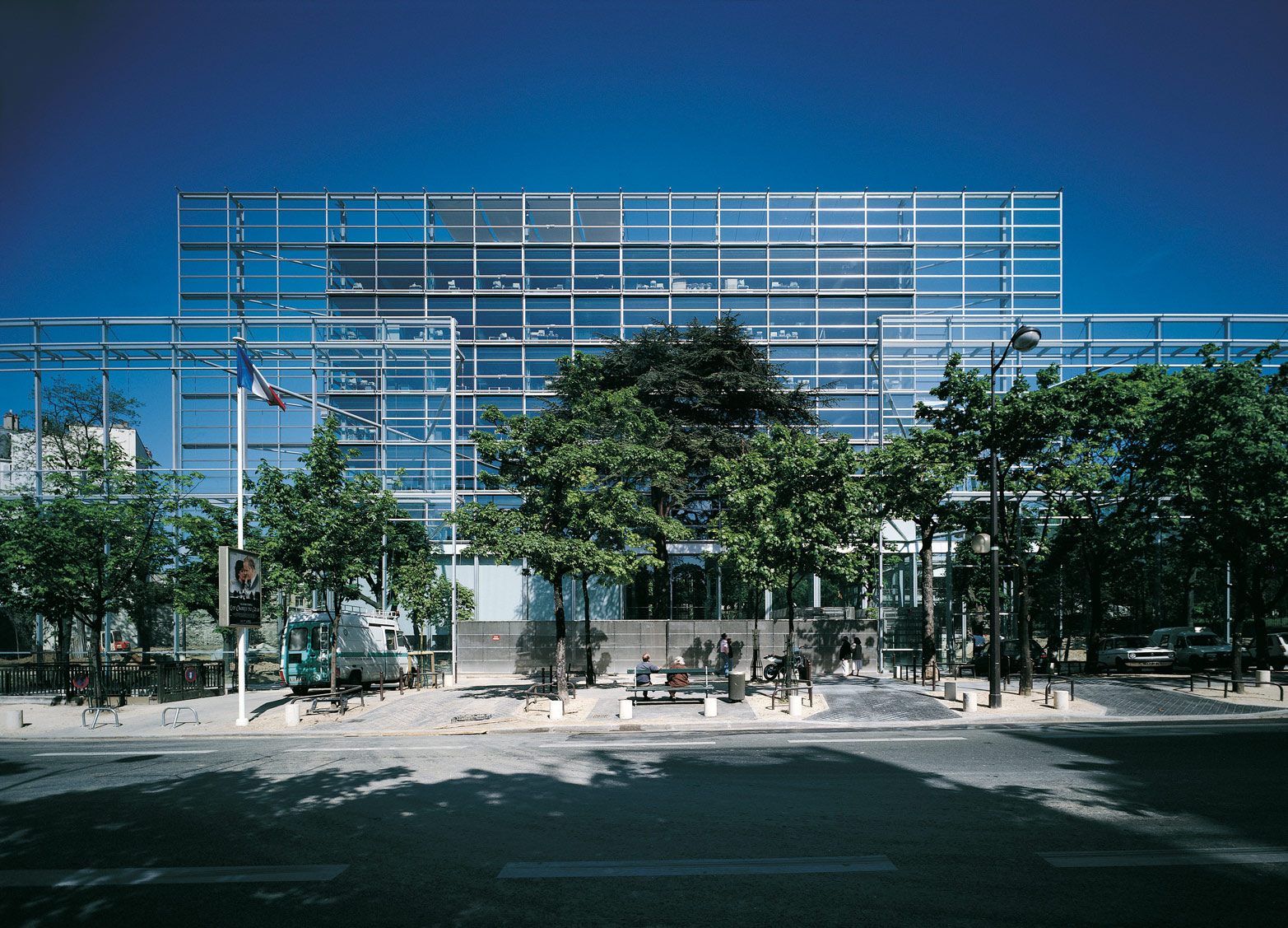
Stretching between Raspail and Palais-Royal is over three decades of collaboration – a web of connections rich with mutual trust, technical experimentation, and a shared pursuit of architectural clarity. Jean Nouvel, the architect with a vision; Fondation Cartier, the experimental institution committed to contemporary art; and UniFor, the industrial partner capable of executing with precision and flexibility, together create a continuity that is rare in architecture. It is not a traditional architect-client-supplier relationship; it is a long-term, design-led collaboration in which every furniture system is conceived in concert with the architecture. What these results all share is a rejection of the idea that minimalism is about having less; rather, it is about a deeper understanding of necessity.
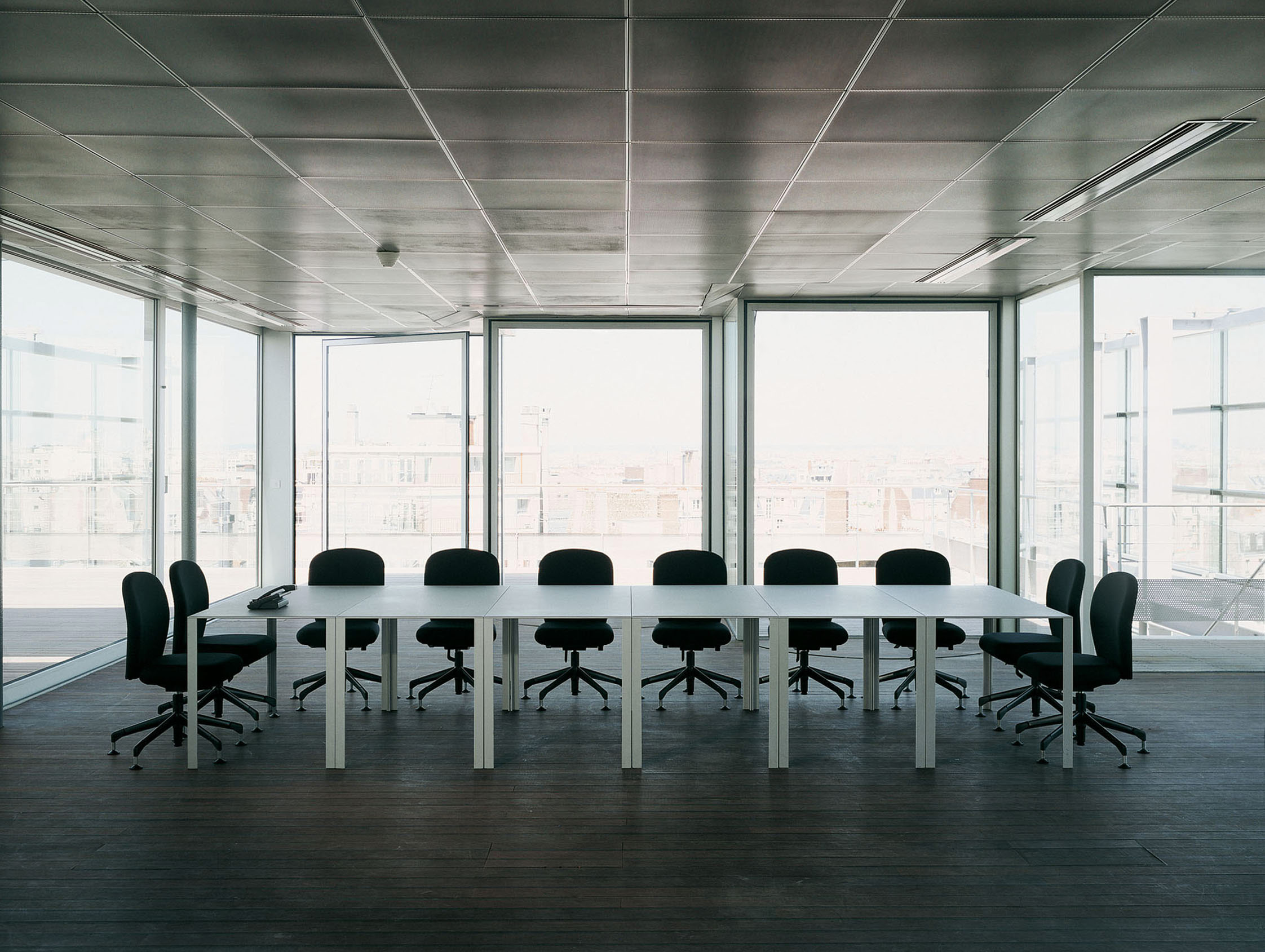 Fondation Cartier | Paris 1994 | ph. Gabriele Basilico
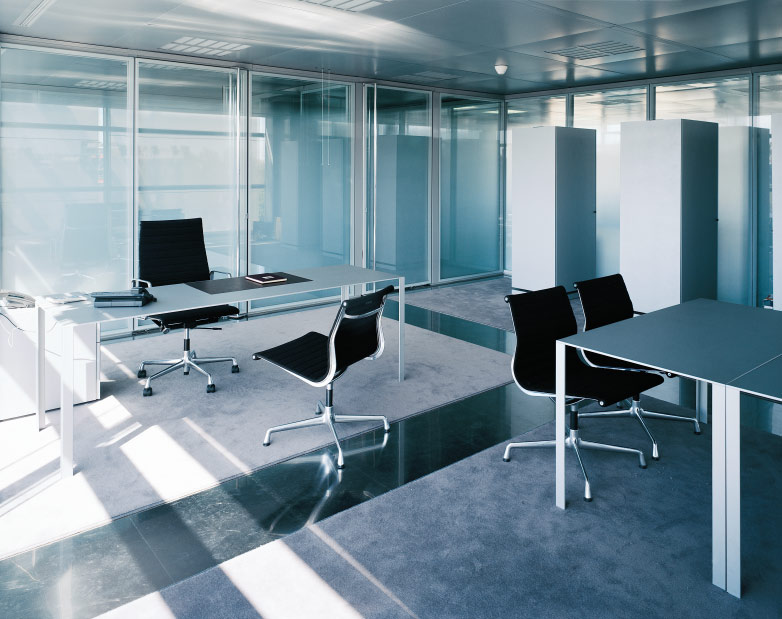 Fondation Cartier | Paris 1994 | ph. Gabriele Basilico
Nouvel has described his approach thusly: “the elementariness that I seek has nothing to do with pure minimalism. Even when design strives to minimise the material aspect, the design is no less creative”.
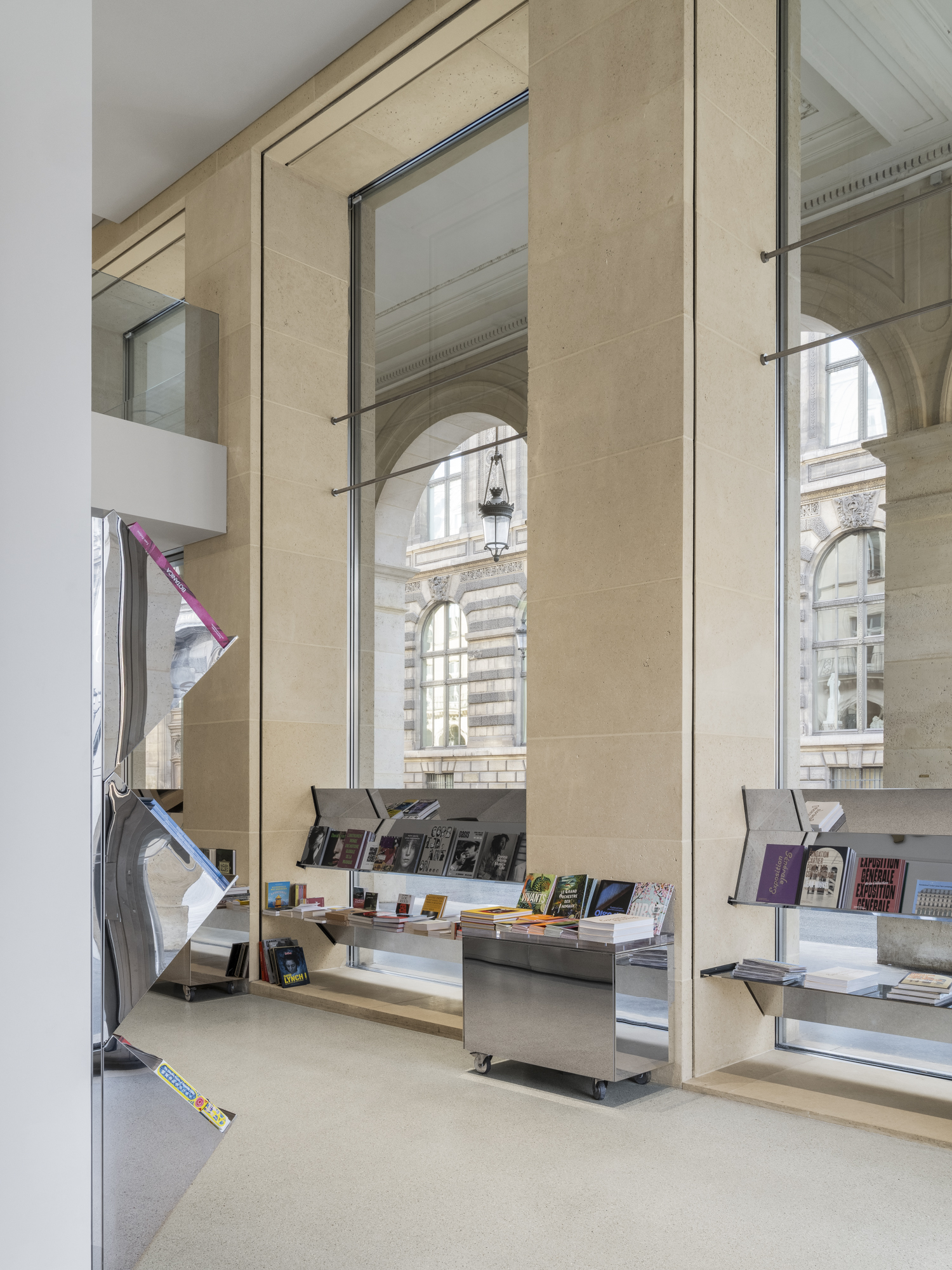 The Fondation Cartier pour l’art contemporain’s bookshop | Paris 2025 | ph. A. Saletta - DSL Studio
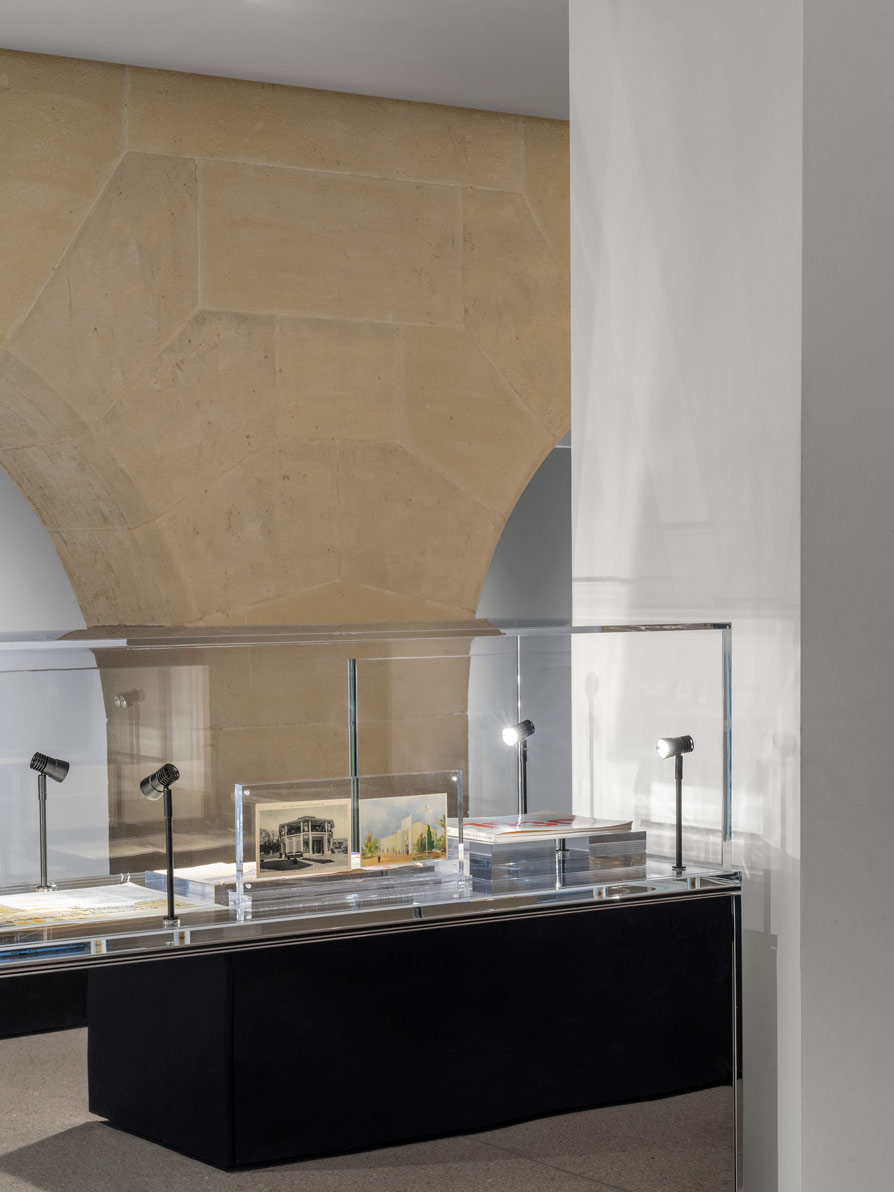 The Fondation Cartier pour l’art contemporain | Paris 2025 | ph. A. Saletta - DSL Studio
Within this long-term partnership is a dialogue in which architecture and furniture are inseparable, producing interiors that feel both precise and alive, familiar yet endlessly adaptable. What is distinctive about this collaboration is that UniFor is not simply furnishing Nouvel’s buildings; it operates almost as an extension of the architectural project itself. Nouvel’s architecture seeks to be light, responsive and elegant. Fondation Cartier requires interiors that can be reprogrammed constantly for exhibitions, offices, and public events. For Palais-Royal in 2025, UniFor developed bespoke solutions for the entire bookshop area: from low-steel units with plexiglass display structures to house the most valuable volumes, through to shop window shelving. Elsewhere, a large bookcase has been engineered such that it can also transform into a portal, revealing the space’s concealed technical rooms. Meanwhile, the checkout counter is also composed of mirrored sheet-metal elements and a series of removable wall-mounted shelves. Together, the three collaborators have created interiors that can shift and transform while preserving the integrity of the architectural idea.
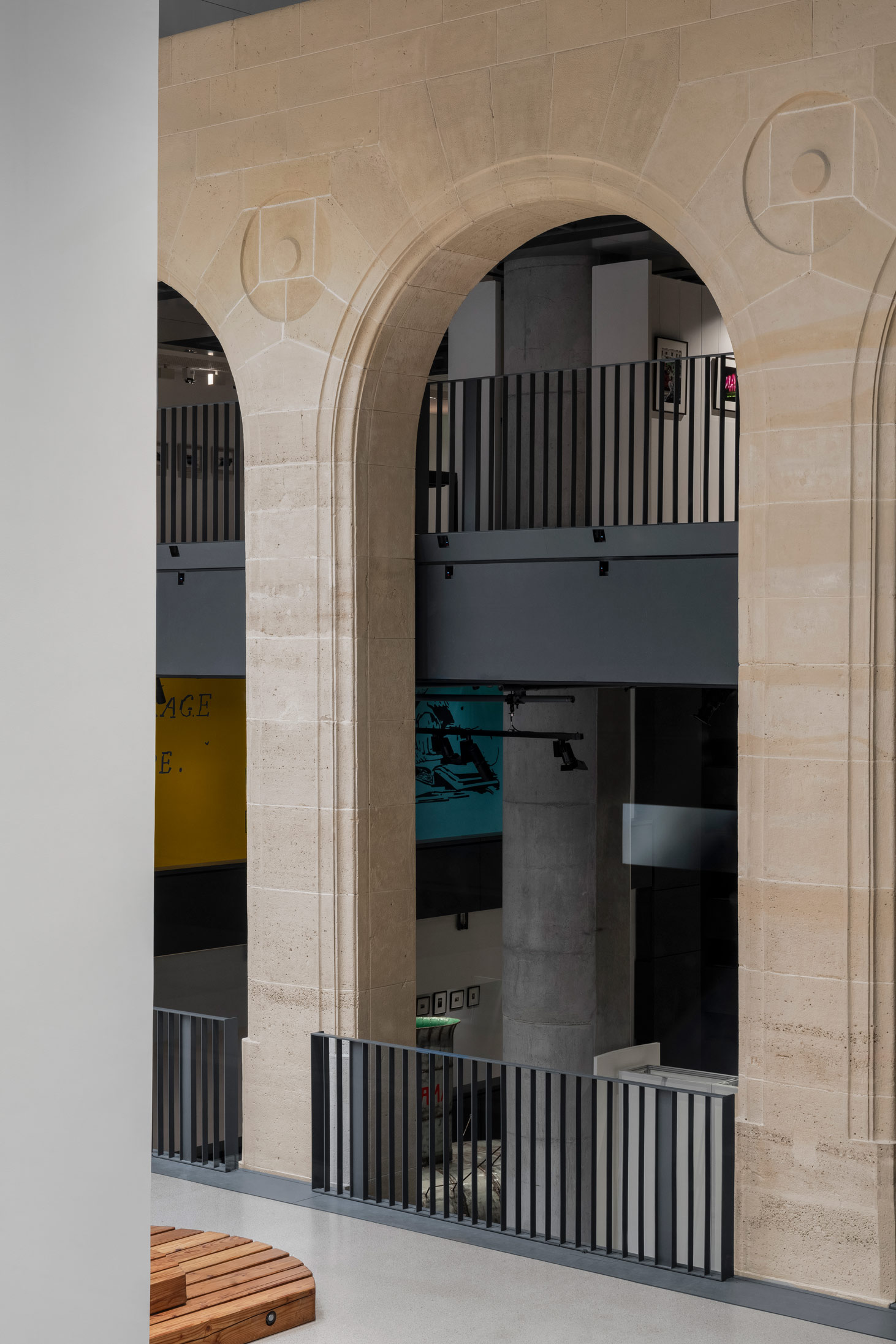 The Fondation Cartier pour l’art contemporain | Paris 2025 | ph. A. Saletta - DSL Studio
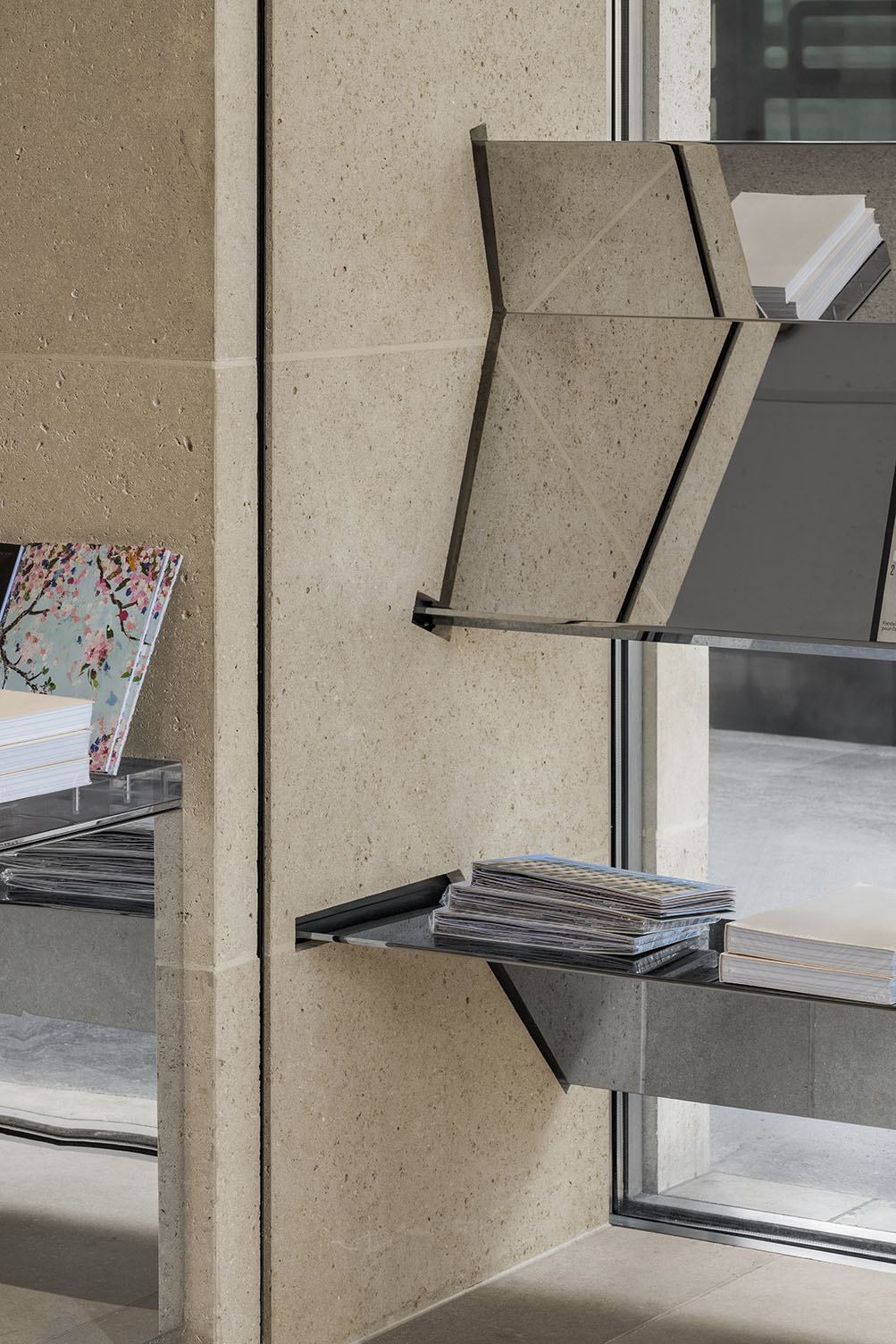 The Fondation Cartier pour l’art contemporain’s bookshop | Paris 2025 | ph. A. Saletta - DSL Studio
In Domus 763 (September 1994), architecture historian Federica Zanco wrote that UniFor’s original Less Furniture “imposes a minimal uniformity indifferent to hierarchies… owing this characteristic precisely to the physicality of the materials and techniques employed”. These planes, carefully engineered by UniFor, for Raspail became the structural backbone of the interiors, demonstrating the company’s technical expertise in precision manufacturing and modular construction, which allowed the furniture to be lightweight without compromising structural stability. The Less series was built primarily from steel for its structural elements. Triangular plates and extruded steel sections were used for stability, while precision welding and finishing techniques ensured both durability and a refined aesthetic. The result was a space in which furniture and architecture are inseparable – where each table mediates between human use and the conceptual clarity of a vision imagined as a single, cohesive space.
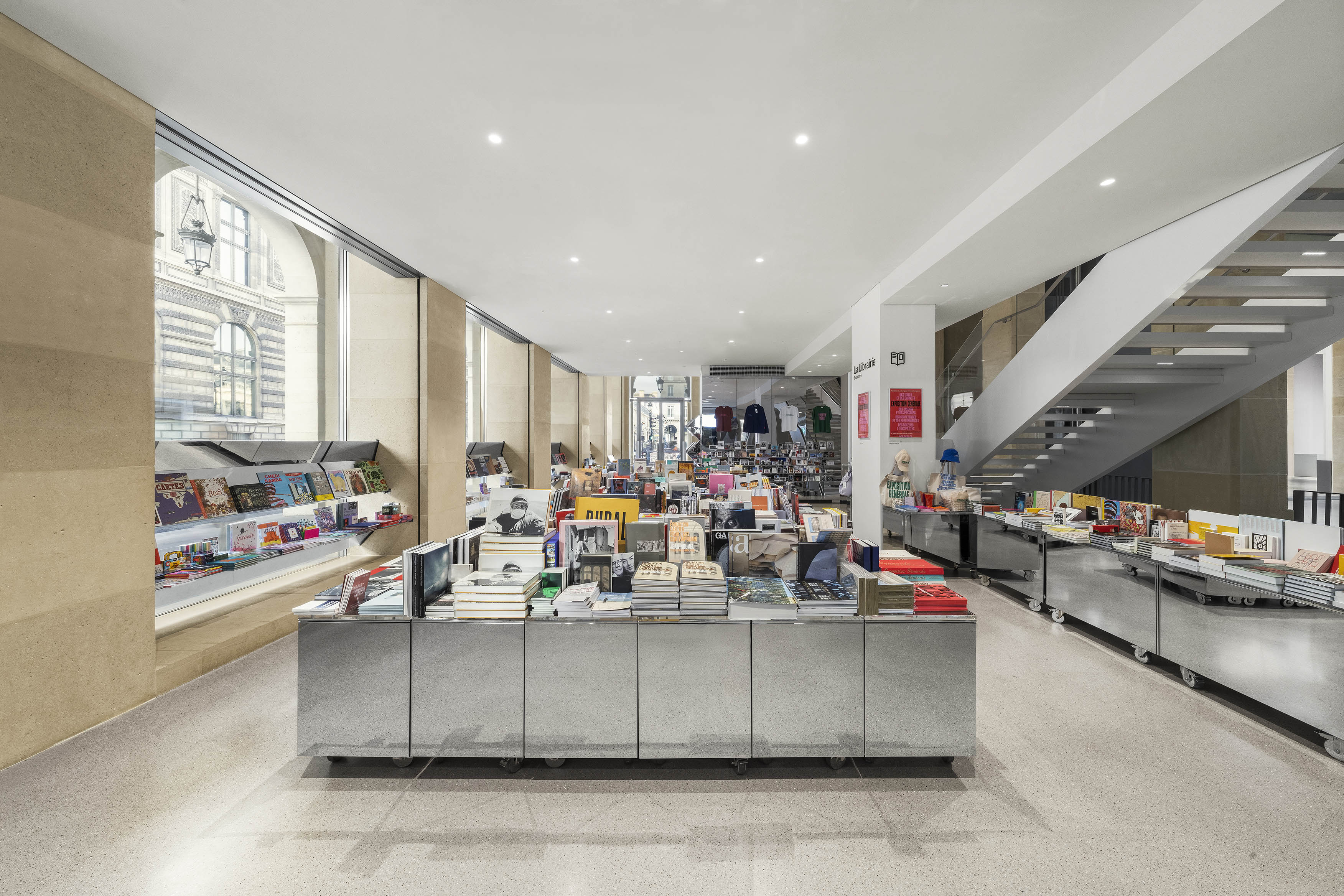 The Fondation Cartier pour l’art contemporain’s bookshop | Paris 2025 | ph. A. Saletta - DSL Studio
The collaboration between Nouvel’s office and UniFor is as much a method as it is a partnership, rooted in the late 1980s when the architect first began exploring how furniture could extend his architectural ideas. UniFor’s project-driven culture allowed the company to treat each commission as a prototype, iteratively testing materials, dimensions, and modular components to align precisely with Nouvel’s vision.
As the architect observed in his essay ‘A place for the unexpected’ for the publication The Fondation Cartier pour l’art contemporain by Jean Nouvel, “I have always believed that a museum is the perfect place to generate ideas, to discuss them, to be present, to be elsewhere, to be inside, to be outside, to be in the city... My goal is to offer this possibility in each of my projects of this kind.”
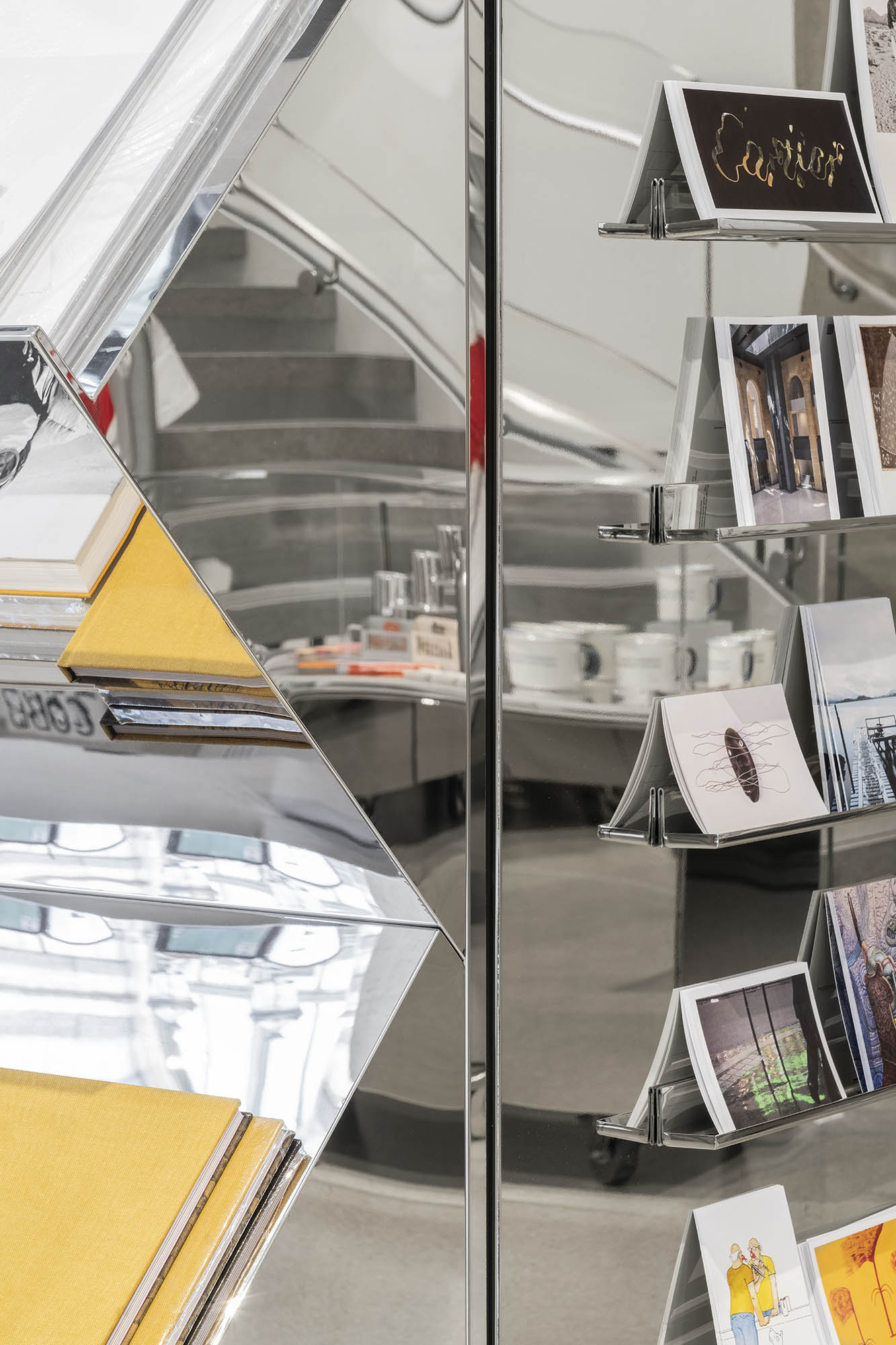 The Fondation Cartier pour l’art contemporain’s bookshop | Paris 2025 | ph. A. Saletta - DSL Studio
This iterative approach means that what begins as a bespoke piece for a specific exhibition or office configuration can evolve into a serial product, refined through engineering ingenuity and the practical knowledge embedded in UniFor’s workshops. In doing so, the furniture systems also support the Fondation Cartier’s wider role as a culture maker and custodian, allowing archives, exhibitions, and workspaces to coexist, adapt, and respond to the demands of contemporary cultural production.
UniFor functions as the technical memory of this working relationship, recording, testing, and perfecting solutions that respond to the ever-changing spatial needs of Fondation Cartier. The company’s expertise in precision steel fabrication, modular joints, and adaptable assembly ensures that each piece remains structurally sound, while still retaining its minimal aesthetic. The Less series at Raspail and the custom solutions for Palais Royal, combined with LessLess, exemplify this approach: pieces are conceived for flexibility, engineered to exacting tolerances, and refined through repeated use, prototyping, and collaborative feedback. In this way, UniFor is an active participant in translating Nouvel’s architectural ideas into enduring, operational forms.
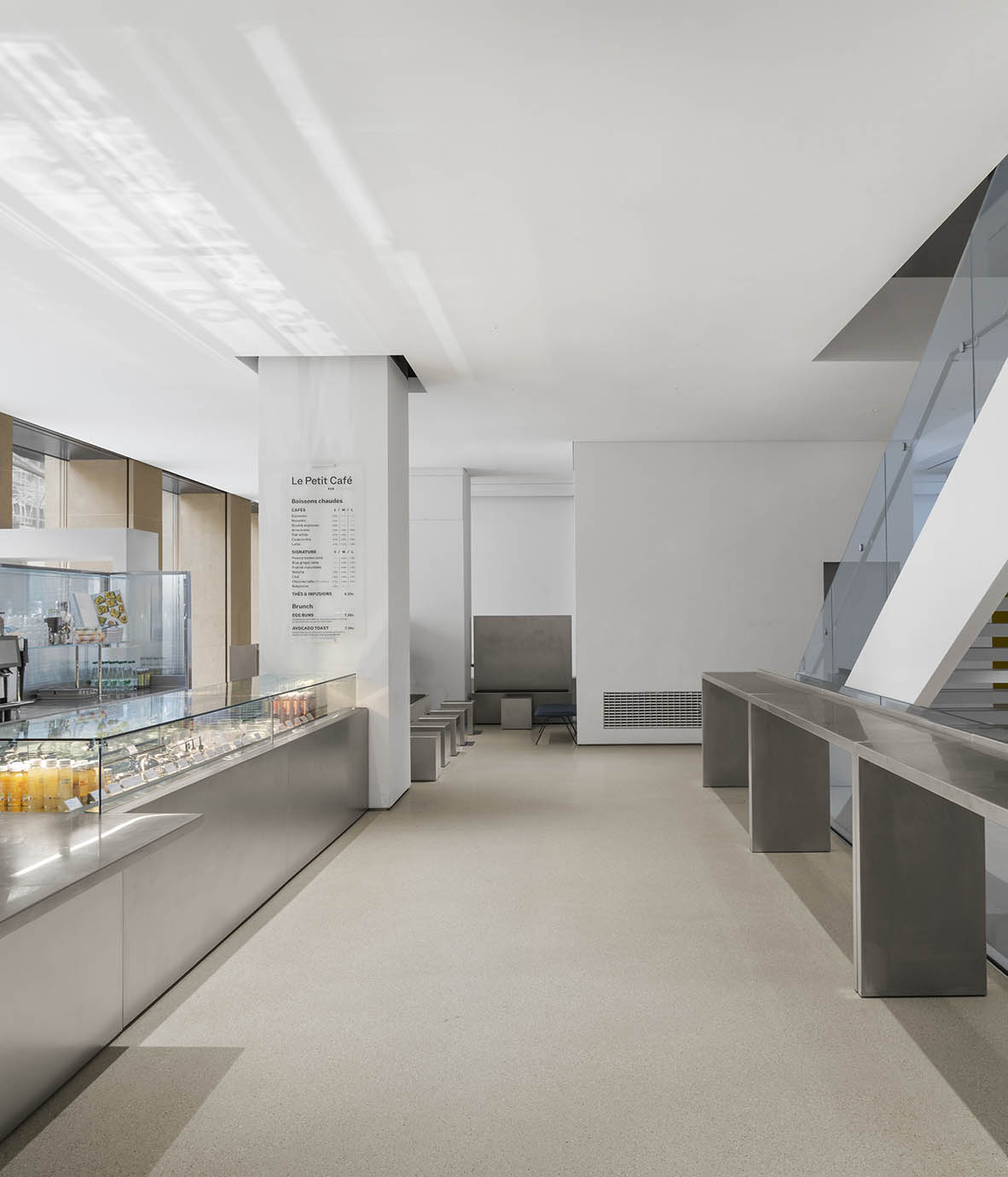 The Fondation Cartier pour l’art contemporain’s cafè | Paris 2025 | ph. A. Saletta - DSL Studio
In 2025, on the other side of the Seine from Raspail, the collaboration between the architect and UniFor reached a distillation of three decades of shared design thinking at Palais-Royal. This building occupies a historic Haussmannian block at 2 Place du Palais-Royal, reimagined internally by the architect for Fondation Cartier to accommodate flexible exhibition spaces, offices, a public bookshop, and a café. Nouvel’s architecture continues the experimentation in transparency and fluidity first explored at Raspail, but now translated into a dense, city-centre context where interior walls, circulation, and light must negotiate an existing historical framework.
Within this context, UniFor’s engineering expertise is critical. Five moveable platforms, adjustable to eleven different heights, allow galleries to be reconfigured with minimal intervention, while mirrored panels and reflective furniture in the bookshop and café create a sense of depth and emptiness. UniFor translates Nouvel’s spatial ideas into hardware that is exacting yet invisible, maintaining the conceptual clarity of the architecture while making it operationally flexible and enduring.
In the new Palais-Royal building, a single moment captures the essence of this three-decade collaboration: a bookshop portal slides open to reveal back-of-house, and light scatters across mirrored panels, reflecting both visitors and interior. Here, furniture and architecture perform as one, each element supporting the other, every surface and frame tuned to Nouvel’s vision. Nouvel created the face of Cartier – a spatial identity co-authored by architect, institution, and manufacturer, where the clarity of form, the adaptability of space, and the subtlety of material all converge. Across 32 years, what began as a series of experiments in transparency and modularity at Raspail has matured into a living architecture and institutional philosophy at Palais-Royal: interiors that can change, flex, and respond, yet remain unmistakably Cartier. UniFor’s furniture continues to shape the way the Fondation Cartier is experienced; architecture and furniture function together as a single gesture.
Main Image: The Fondation Cartier pour l’art contemporain, Paris, 2025 | ph. Alessandro Saletta – DSL Studio
A century of sound, design, and memory explored through an elegant reflection on acoustics as an emotional and architectural experience, in the enduring spirit of Bang & Olufsen.
The Future Perfect’s David Alhadeff and ceramicist Carmen D’Apollonio guide us through the cultural hotspots of the city they call home: Los Angeles.
Porosity between the exterior and interior space defines contemporary luxury in a series of new developments that open up buildings to the great outdoors.


