browse by topics


“A never-failing will to create only the best … persistently to find new ways” has been Peter Bang and Svend Olufsen’s mission when they founded Bang & Olufsen a century ago. In 1925, the two Danish engineers climbed into the attic of a family manor in Struer, a small town in the flat, wind-scoured west of Jutland, and began tinkering with radio transmitters. They were barely out of university, without a factory, investors, or any precedent— only a conviction so strong that it continues to guide the company today. From the very beginning, their ambition was not merely to make better technology, but to change how people experienced being at home: to make the ordinary act of sitting in a room, surrounded by sound and light, feel like something close to wonder.
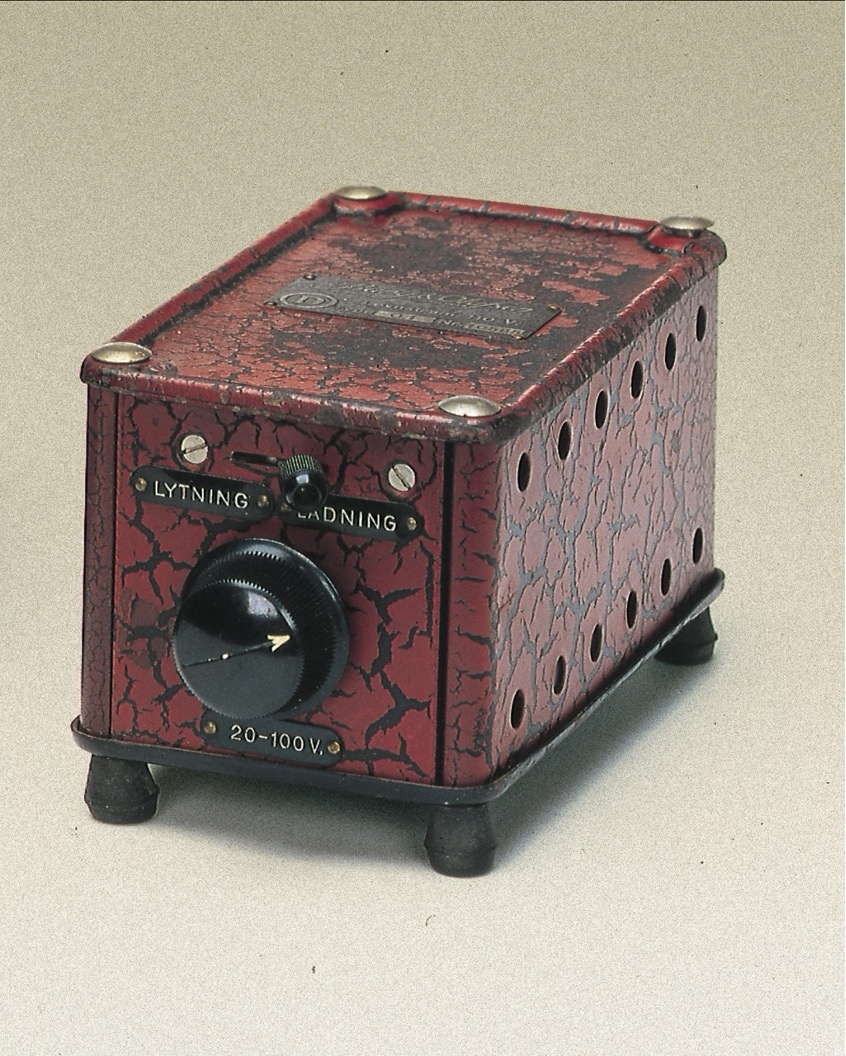 Bang&Olufsen Eliminator
Their first invention, the Eliminator, solved a problem so elegantly that it seemed almost inevitable in retrospect: it freed the radio from its battery, allowing it to draw power directly from the wall.
A modest idea, perhaps, but one that revealed the philosophy governing everything Bang & Olufsen would make for the next hundred years. The goal was never the device itself. It was the experience that the device made possible. Music, arriving without effort, as if it had always been there.
That attic, and the landscape surrounding it, have never entirely left the objects Bang & Olufsen makes. There is something of the spare, open quality of the Danish west coast, its long light and refusal of ornament, in the design language the brand has carried across a century. Early radios reflected a meticulous attention to detail and the warm grain of Danish teak. Televisions were conceived not as appliances but as furniture with a purpose, objects considered worthy of the living room rather than merely tolerated in it. By the 1970s, Bang & Olufsen had begun working with some of Scandinavia’s most rigorous industrial designers, producing work that entered museum collections as readily as it entered homes. The objects were never trying to disappear into the background. Rather the opposite is true, they are intentionally present as true sculptures of sound.
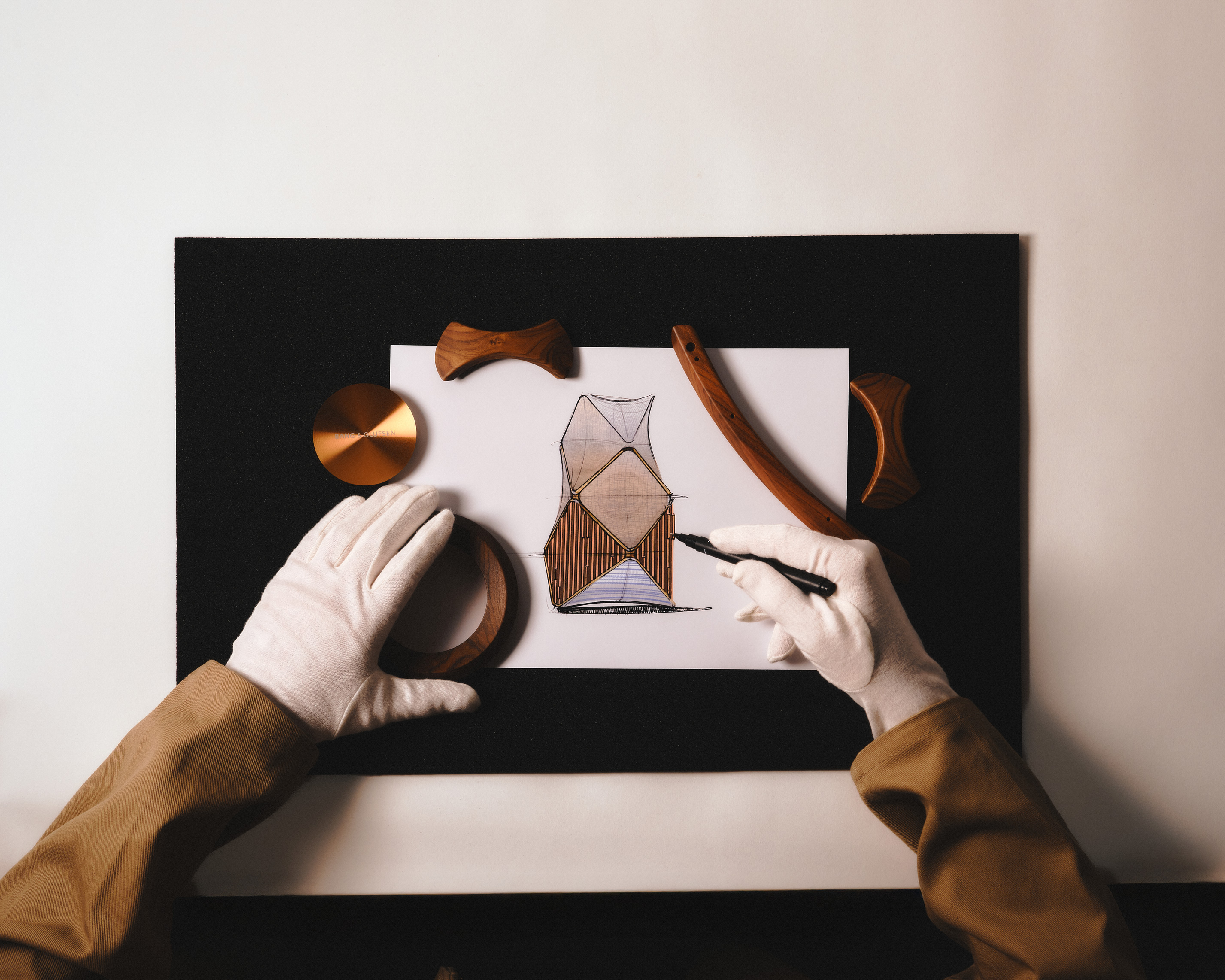
This quality of presence — of an object that holds its ground without demanding attention — became one of the defining characteristics of the Bang & Olufsen approach. A speaker, in their hands, was never purely a technical proposition. It was a sculptural one. Something to be placed, considered, lived with. The Beolab series, which emerged in the late 1980s and has continued to evolve ever since, made this ambition explicit: speakers designed with the same care given to a piece of furniture or a work of art, capable of standing in a room without apology, with forms considered as carefully as the sound they produce.
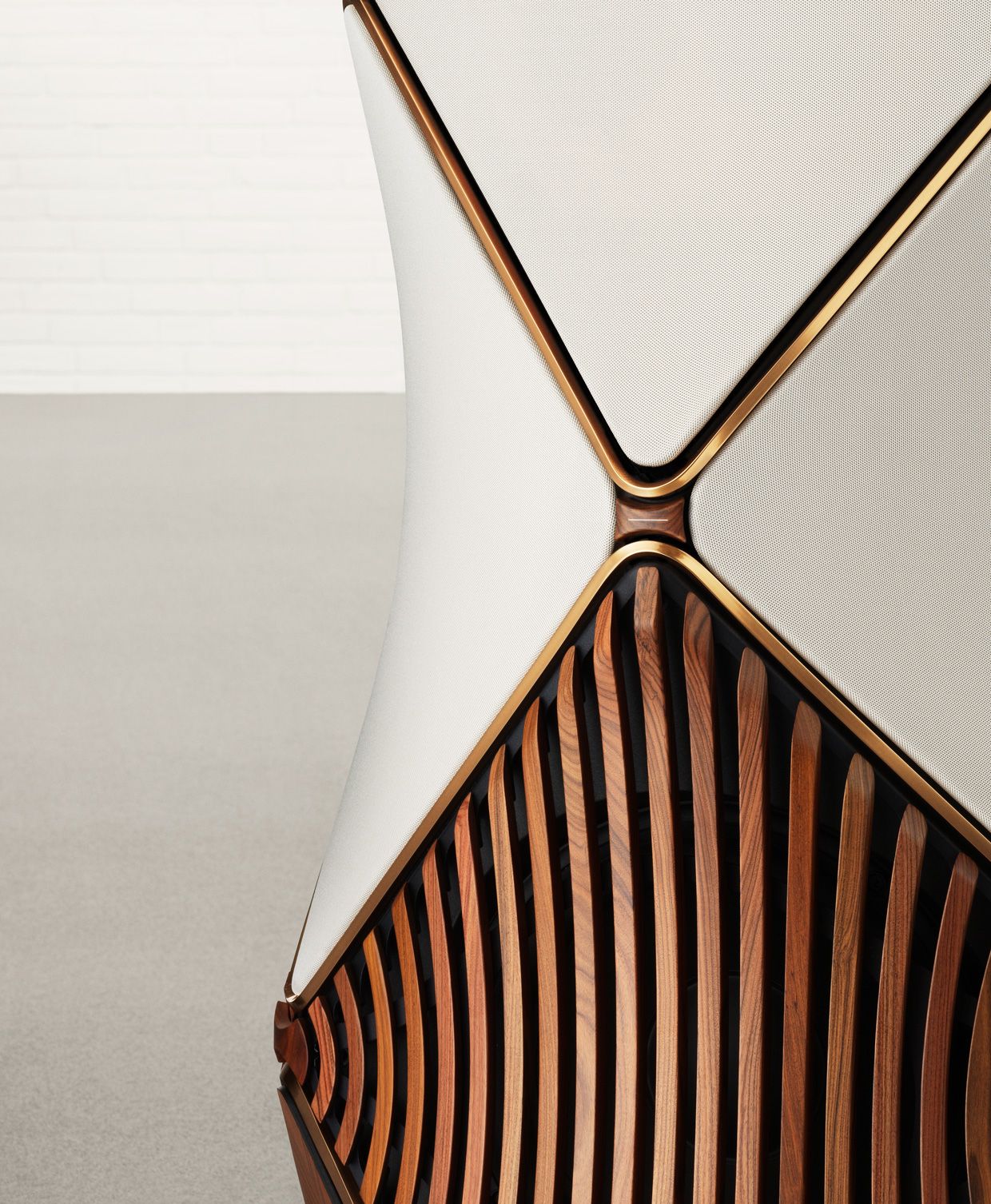 Beolab 90 Monarch Edition with crown
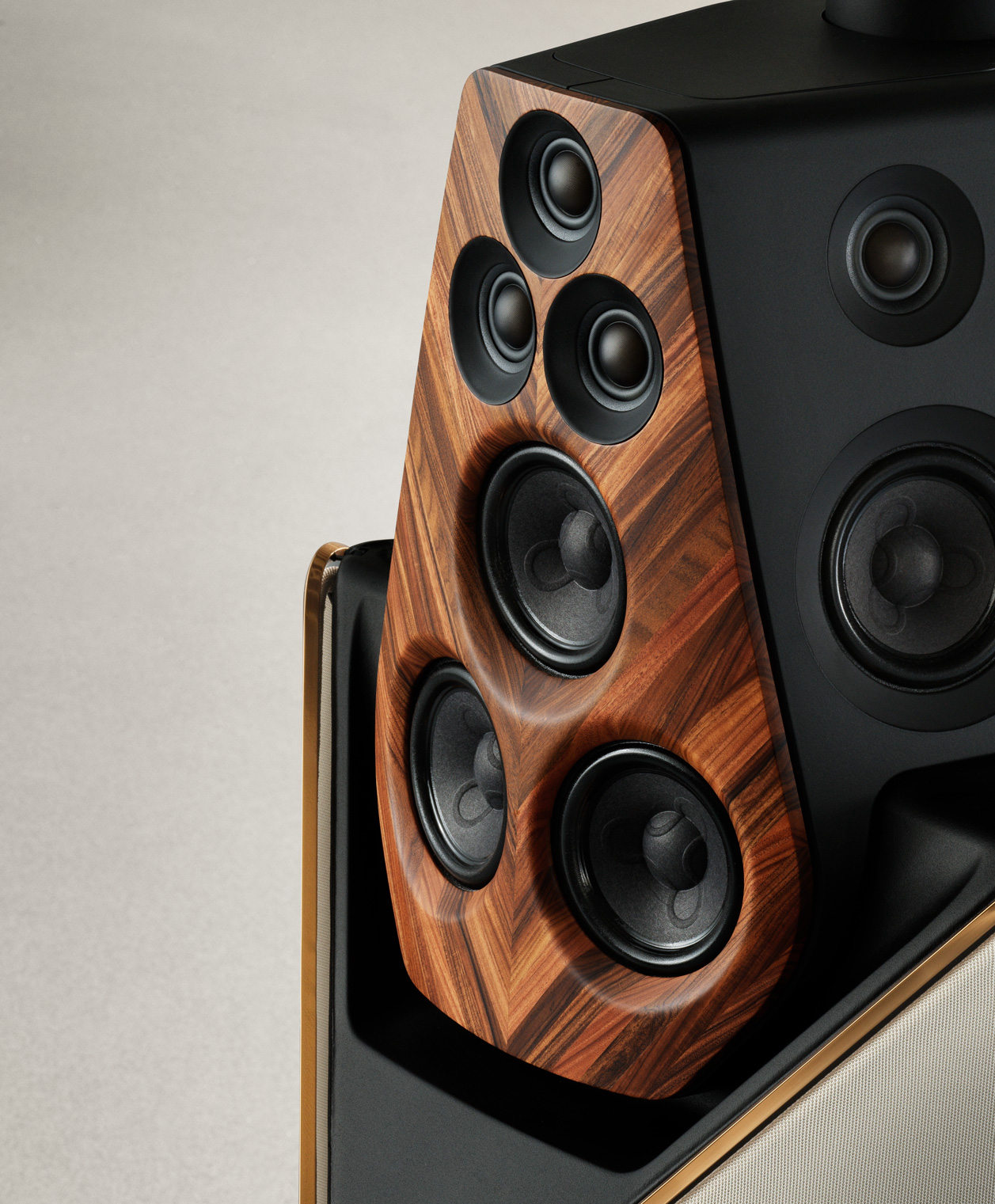 Beolab 90 Monarch Edition
What distinguished Bang & Olufsen across the decades was not technical ambition alone, though that was considerable, but a particular sensitivity to how people actually lived. Controls were intuitive before the word existed in the design vocabulary, surfaces invited touch and proportions acknowledged the human body. The objects did not ask to be operated so much as responded to. And in return, the people around them responded: their movements, their moods, their attention shaped by what they heard. Sound as something physical. Something that moves through a room and moves the people in it.
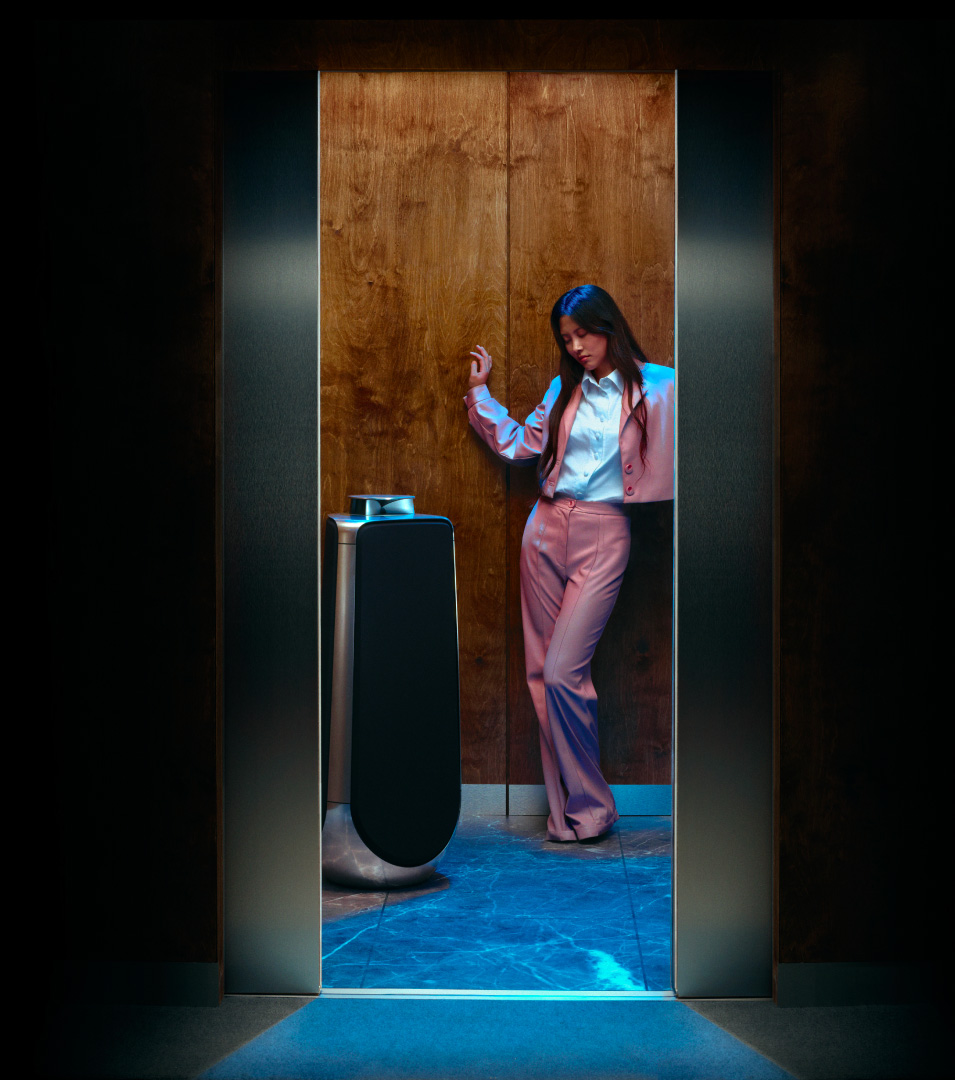 Sound Elevated Campaign
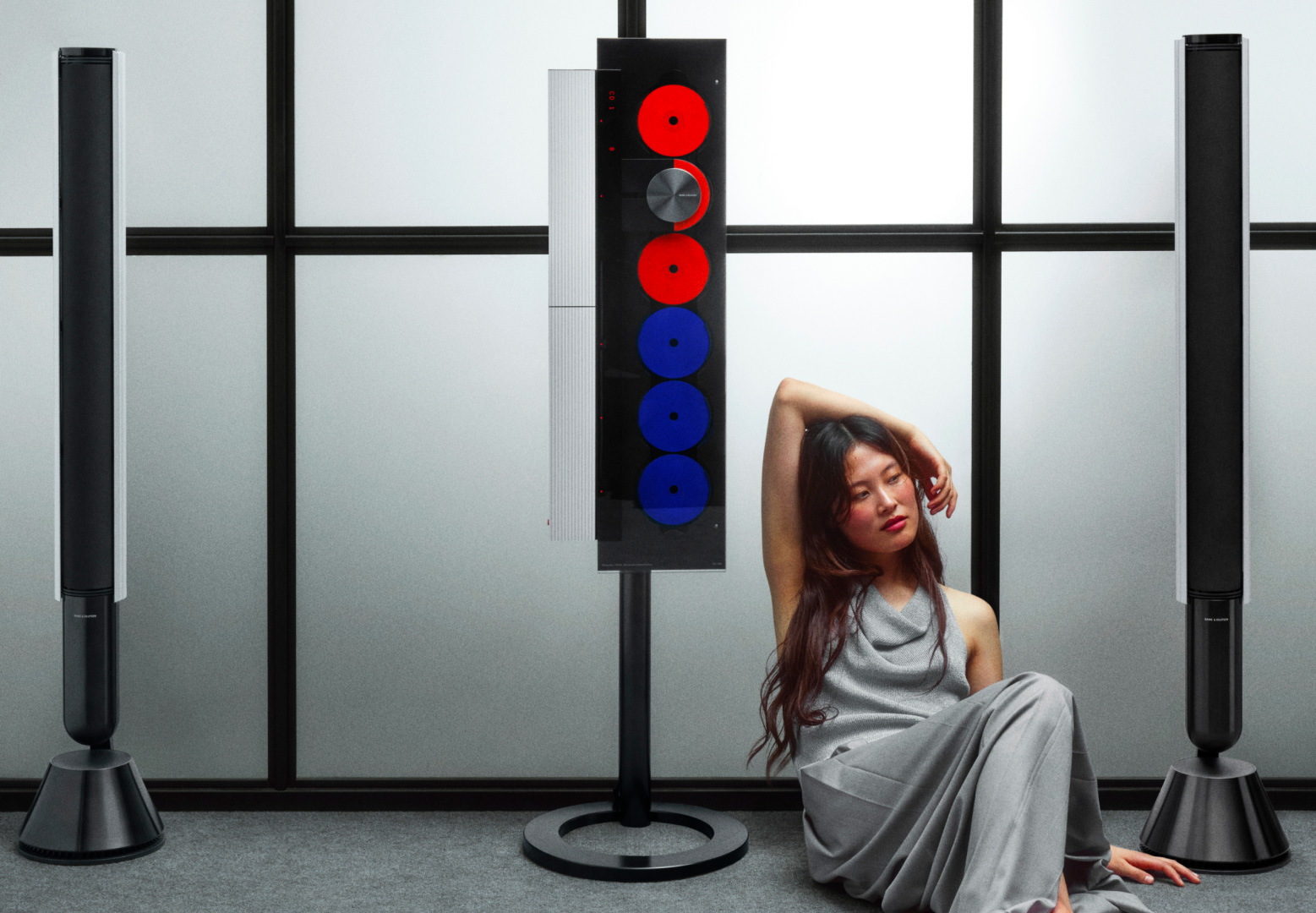 Sound Elevated Campaign
 Sound Elevated Campaign
This relationship between sound and the body — between music and the way it changes how a space feels — has always sat at the centre of what Bang & Olufsen makes. It is not incidental. A room in which music plays is a different room from one that is silent. The proportions suddenly seem to shift and the air carries something extra.
People gather differently, move differently, speak differently. For a hundred years, Bang & Olufsen has been designing for precisely this transformation: the moment a space becomes charged with sound and begins, almost imperceptibly, to come alive.
There is also, in the brand’s longer history, a quality of patience that deserves acknowledgement. Bang & Olufsen has never chased trends. It has instead pursued a set of convictions with a consistency that, across a century, amounts to something close to a philosophy of the good life: that the objects surrounding us matter, that the sounds we hear shape our experience of time, and that beauty, when it is genuine rather than decorative, has an enduring quality that outlasts fashion. Products from three or four decades ago retain a serene self-assurance that many contemporary offerings struggle to match. It is the mark of design that begins from a deep understanding of purpose rather than from a response to the moment.
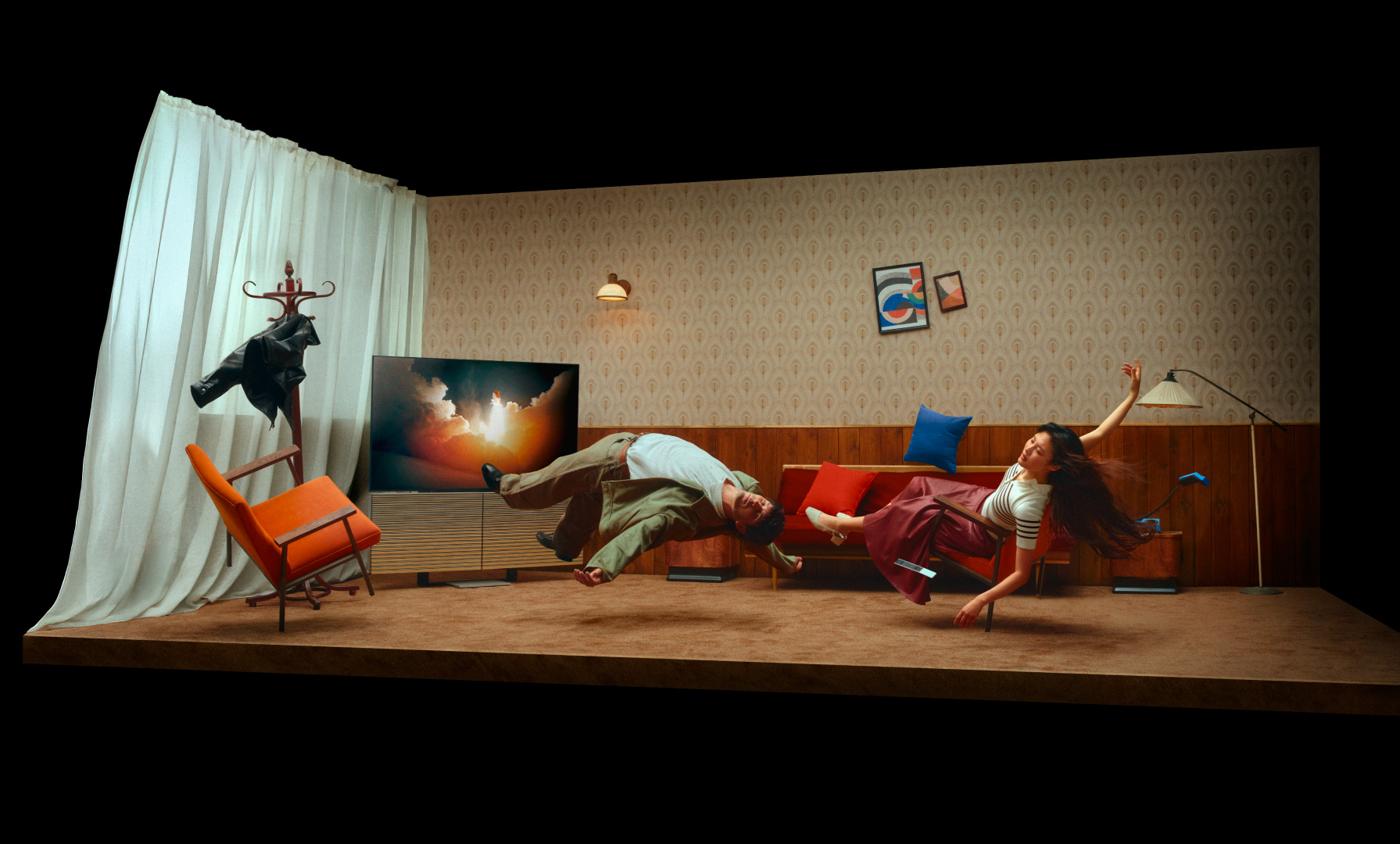
One hundred years on, the attic in Struer has become a kind of origin myth. The centenary year has taken the vision it contained onto an international stage. During Milan Design Week, Bang & Olufsen joins Molteni&C’s Responsive Nature installation by Elisa Ossino Studio, weaving its speakers throughout the exhibition to create a co-crafted soundscape that meets Ossino’s spatial language on its own terms. It is a meeting of two sensibilities with more in common than might first appear: both understand space as a living composition, one that is only completed by the presence of the people inside it. Sound and form, material and atmosphere, arriving together.
The Future Perfect’s David Alhadeff and ceramicist Carmen D’Apollonio guide us through the cultural hotspots of the city they call home: Los Angeles.
Porosity between the exterior and interior space defines contemporary luxury in a series of new developments that open up buildings to the great outdoors.
Design historian Catharine Rossi explores the significance of circles, cycles and circularity for the way in which we live and design architecture today.


