browse by topics


Circles and circularity shape our homes and how we live in them. It is at home that we experience the cycles of birth, life, and death of both our loved ones and ourselves – universal conditions performed within the privacy of domestic space. Their inevitability reminds us of how the home needs to accommodate the bigger cycles of our lives and of those who came before and after us, as well as the day-to-night cycles of everyday living.
A growing number of architects are seeking to accommodate life’s multiple stages and generations in our homes today. Here the circle is a useful trope, a metaphor for open, flexible, and equitably experienced spaces, whatever shape they actually take. See Peris + Toral Arquitectes’ 85 Social Dwellings social housing development in Barcelona (2022). Epitomising a wave of economic, environmental and well-designed Spanish housing, the timber structure consists of six floors built around a central courtyard. Each floor is a grid, divided into tatami-mat-sized rooms that can be grouped into different living configurations depending on inhabitants’ needs.
 Apparata's A House for Artists, image: Ståle Eriksen
Similar flexibility is found in Apparata’s A House for Artists (2021) in London. The bold triangles, circles and squares that punctuate its five-storey concrete facade contain generous living spaces with soundproof, full-height double doors that can open up to changing individual flat sizes on a daily or long-term basis. This flexibility facilitates shifting living arrangements and challenges the idea of the isolated nuclear family unit, proposing instead co-living arrangements that offer conviviality and shared childcare and domestic labour. Furthermore, the buildings’ artist-inhabitants benefit from lower rents and access to free onsite workspaces in exchange for running the local arts programme.
This feedback loop between residents and the community is also found in Levitt Bernstein’s Melfield Gardens (2025), a Passivhaus development in London accommodating both students and elderly residents. This intergenerational arrangement performs multiple social functions: it enables older people to downsize and stay living in their local area while freeing up much-needed larger homes for families, and students benefit from lower rent in return for spending time with their elderly neighbours a few hours each week. There are benefits for both generations here, reducing loneliness and expanding a locally-rooted circle of care, community and kinship, as well as showing the link between our individual homes and the broader neighbourhoods they exist in.
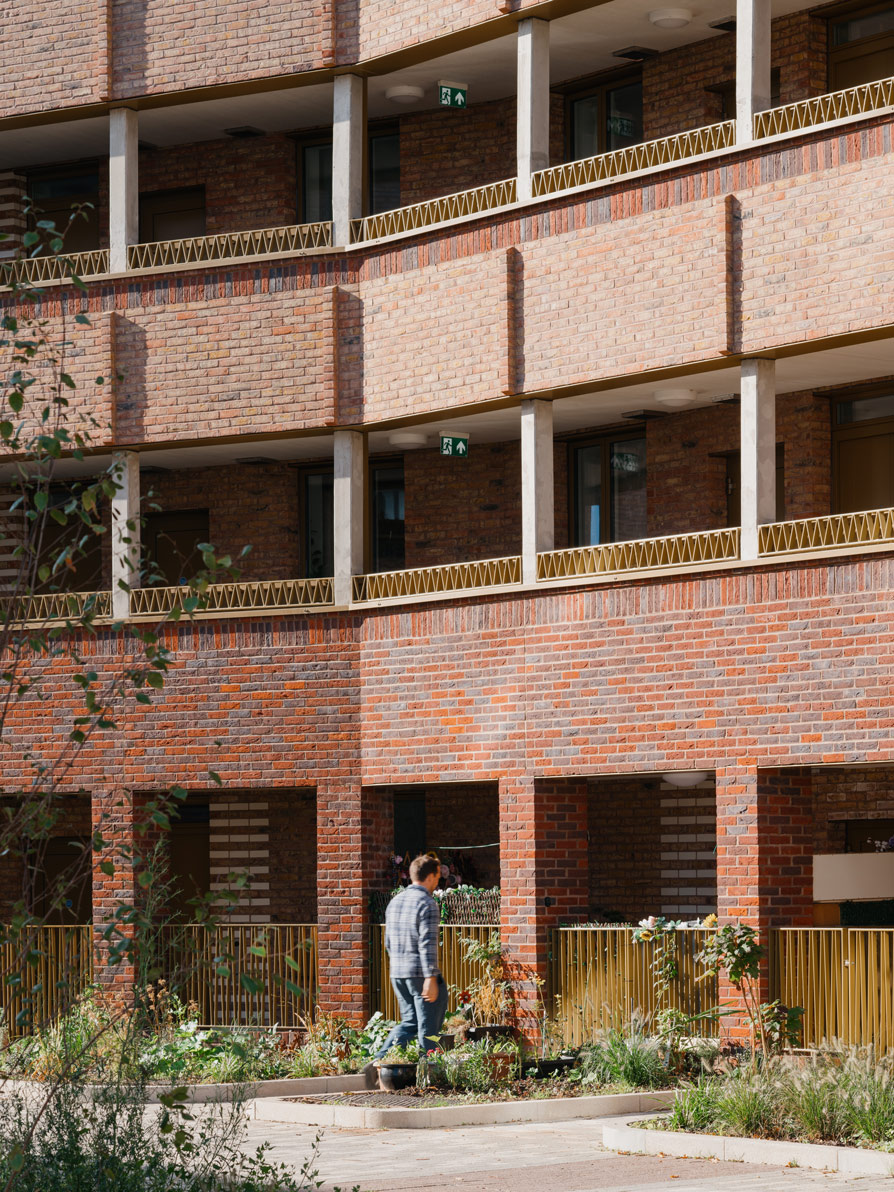 Levitt Bernstein’s Melfield Gardens. Image: Tim Crocker.
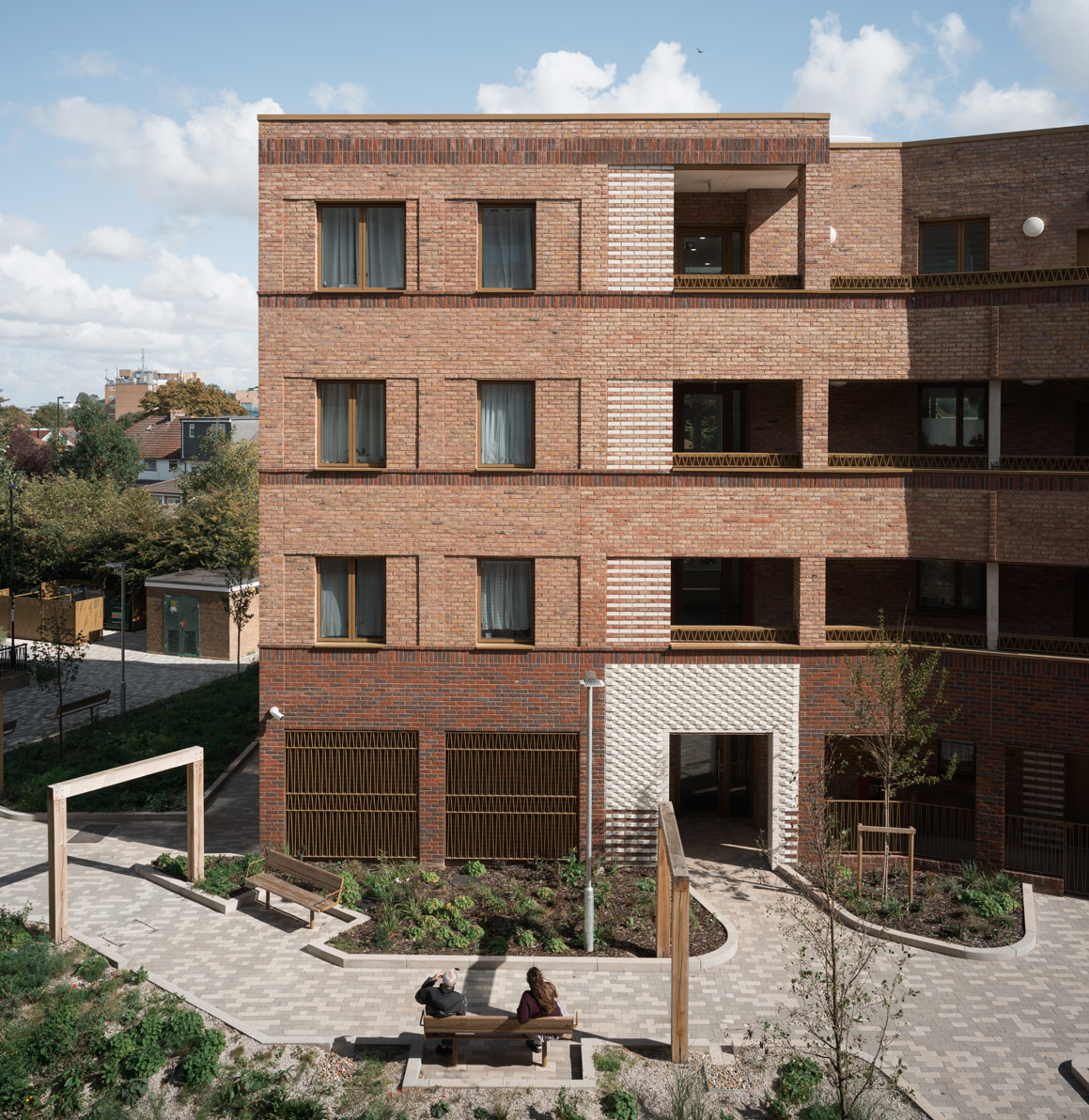 Levitt Bernstein’s Melfield Gardens. Image: Tim Crocker.
Within the home, modular furniture systems offer one way to facilitate changing living needs and arrangements. Swiss-French designer Alexandra Gerber’s Up shelf (2017) is a free-standing extruded aluminium unit that uses window construction technology to enable individual shelves to be easily moved up and down. While Gerber’s shelving elegantly celebrates industrial aesthetics, modularity does not have to be machine-like. Omi Collective’s Omi Series 2 stool (2025), for instance, explores the idea of an “African way of seating” through three two-legged solid timber stools that can be joined together with a steel rod. Their indigo colour and chunky carved profile reference both Asante stools and Shona and Tonga headrests – objects with practical, symbolic, and ritualistic functions.
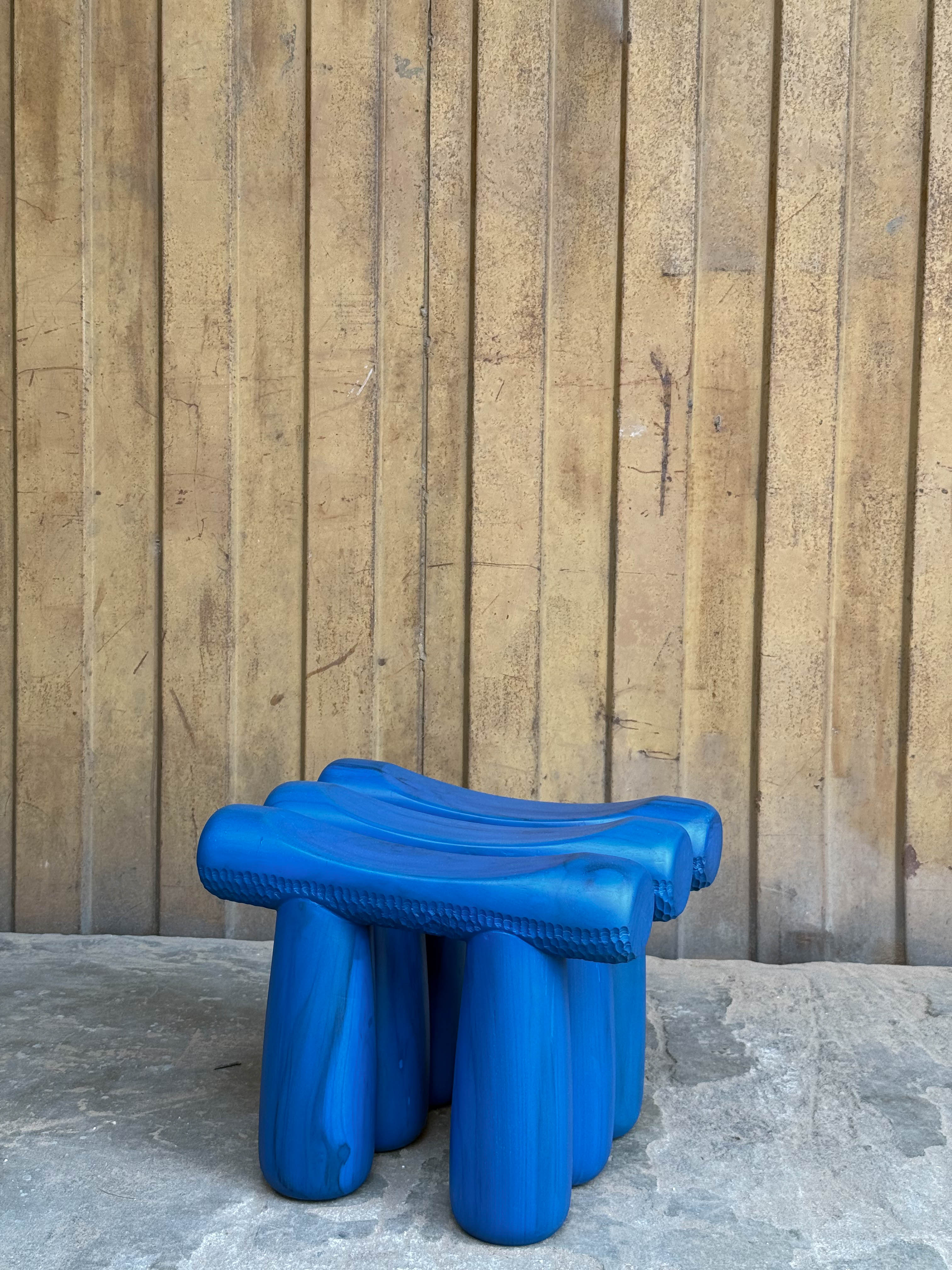 Omi Collective’s Omi Series 2 stool (2025)
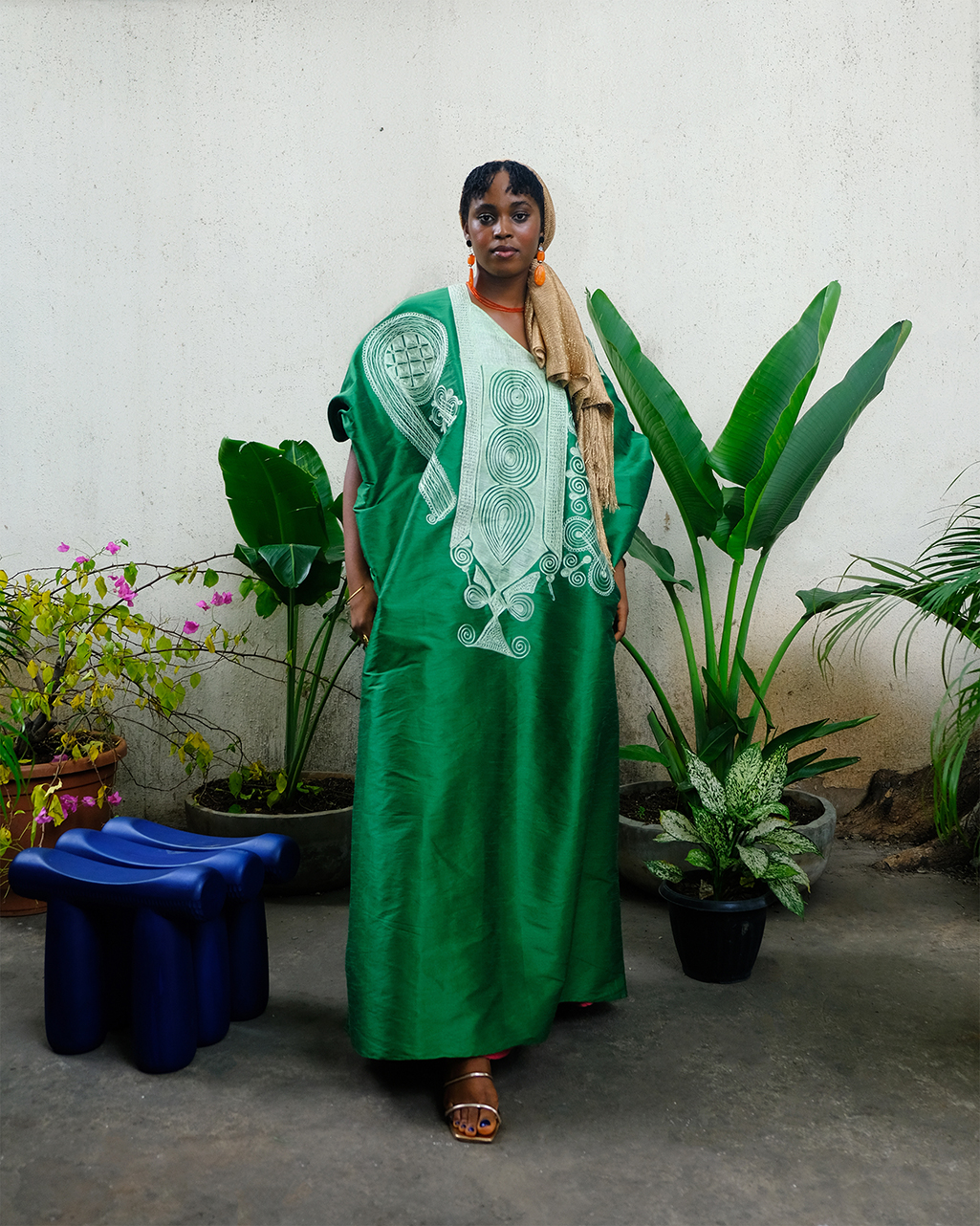 Omi Series 2 Stool. Credits Yadichimma shot by Daniel Uwaga
Rituals are fundamental to the cycles of living, be they religious, secular, seasonal or commercial. At home we celebrate such events through temporary decorations, celebrations and meals to bring friends and family together. Different but arguably as important are the domestic rituals we undertake each day, such as making a morning coffee, settling into a favourite chair, or laying the table for dinner. Such acts show how domestic living is a daily performance, as we simultaneously make the home and mark the passing of each day.
While rituals’ importance have been overlooked in modern Western cultures, there are designers who celebrate their significance. Ettore Sottsass’ Yantra di Terracotta (1969) ceramics are an early example of this. Inspired by his visits to California’s counterculture and his journeys on the south east Asian hippie trail, Sottsass created a series of small, totem-like monochrome sculptures in geometric forms designed to imbue spiritual reflection in what he saw as an overly commodified domestic realm. More recently, Mexican designer Liliana Ovalle has talked of her wish to make small domestic altars, as seen in her foldable photo-etched brass Altar in a Corner from 2006, which enable users to “honour memories, hopes, and bonds” in the home.
Sottsass and Ovalle’s works speak of different approaches to cross-cultural design, bringing together different aesthetics and practices that express the rich connectivity of our spherical planet’s cultures and the importance of freedom of movement between people and places. There are no borders or boundaries within circles or spheres, but there is a bounded edge which reminds us of our collective and interdependent existence.
There have long been designers who have explored such shared cultural inter-existence. British Nigerian designer Yinka Illori imbues his designs for chairs, cushions and architectural structures with colours, shapes, and patterns combining a postmodernist playfulness with his multicultural heritage. Focusing on local making traditions, French designer Fabien Cappello, based in Mexico City since 2016, has become increasingly drawn to the city’s material economy. This has resulted in projects such as Objetos de Hojalata (2022), a collection of functional objects including buckets and watering cans made out of sheet metal by local manufacturers. The American designers Stephen Burks and Malika Leiper, who is originally from Cambodia, also regularly explore bringing together different cultures. This includes Kuba Sugi (2025), a collection of sculptural forms which coalesce the Congolese kuba cloth tradition with Sugi, a Japanese red cedar. Created in collaboration with crafts practitioners in both Kinshasa and Japan’s Nara Prefecture, the collection of colours, patterns and forms speak of Burks and Leiper’s identification of shared concerns of stewardship – be it of ceremonial traditions, crafts or materials – in two seemingly disconnected cultures.
 Marlène Huissoud's From Insects vases and Peris
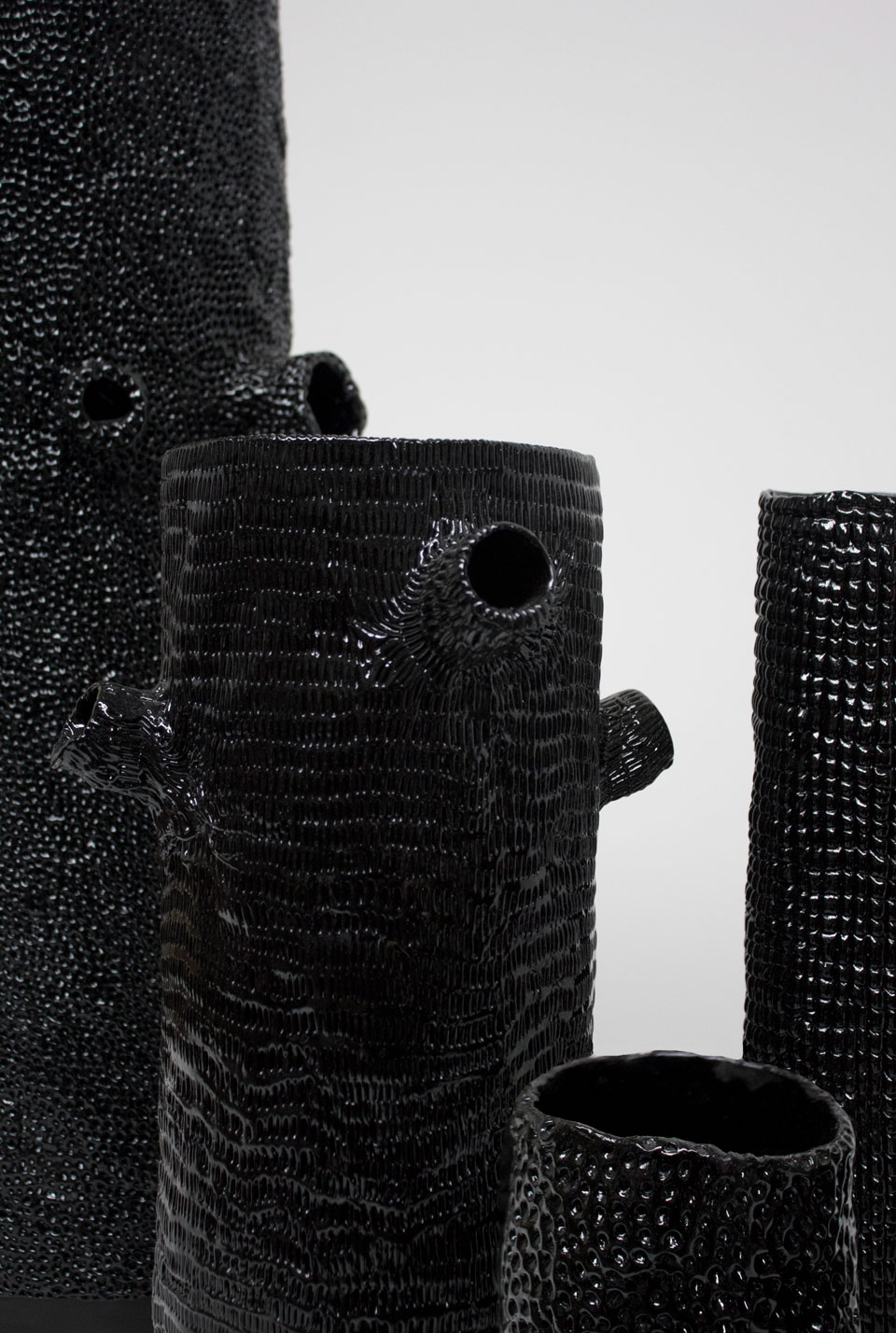 Marlène Huissoud's From Insects vases and Peris
The connectivity and boundedness of our planet does not just affect our relationship with other humans, but also other species. The rise of circular and regenerative design in the late 20th and early 21st centuries show our increasing, if belated, understanding of such coexistence and its importance amidst the climate emergency. Alongside a circular approach to resource use is growing recognition of the cyclical qualities of all lives, be they human, animal or plant. Raised in a family of beekeepers, French designer Marlène Huissoud recognises just this: From Insects (2014) is a vase made from blown propolis, a natural mixture of saliva and beeswax, that is designed to hold flowers, which in turn produce the pollen that bees then pollinate. Having such objects in our homes reminds us of the ecological and seasonal cycles on which we are all dependent. Similarly, Fernando Laposse works with farmers in the south of his native Mexico to create designs from a range of plant fibres – including sisal, loofah and avocado – that show the connectivity of the ground which materials come from to the furniture that then fills our homes.

Circularity, then, is a quality that shapes much of our lives, both in and outside of the home. It reminds us of the boundedness of domestic living and the surprising freedom of such containment; as a place where we construct and communicate our identities, the home is where we bring together multiple identities, both our own and those of others. Ultimately, it is in the home that we can bring together the different objects, rituals, and ways of living that come from the multiple cultures, ages, and relationships that make up our lives, whatever shape they take.
Levitt Bernstein’s Melfield Gardens. Image: Tim Crocker.
A century of sound, design, and memory explored through an elegant reflection on acoustics as an emotional and architectural experience, in the enduring spirit of Bang & Olufsen.
The Future Perfect’s David Alhadeff and ceramicist Carmen D’Apollonio guide us through the cultural hotspots of the city they call home: Los Angeles.
Porosity between the exterior and interior space defines contemporary luxury in a series of new developments that open up buildings to the great outdoors.


