browse by topics


Waiting rooms in offices rarely inspire warmth. Built to accommodate brief interludes – your daily entry and exit, ten nervous minutes before an interview, five seconds before your next meeting – these liminal zones often fall victim to sparse, soulless decoration and poor-quality furniture. Borealis, however, which debuted at Paris Design Week in September 2025, aspires to challenge this typology in response to an increasingly flexible contemporary workspace. Designed by Snøhetta, in collaboration with Citterio, the modular seating system recognises the subliminal power of furniture to shape atmosphere. Here, in Snøhetta’s words, furniture becomes “quiet architecture, something that can organise space as much as it can host the body.”
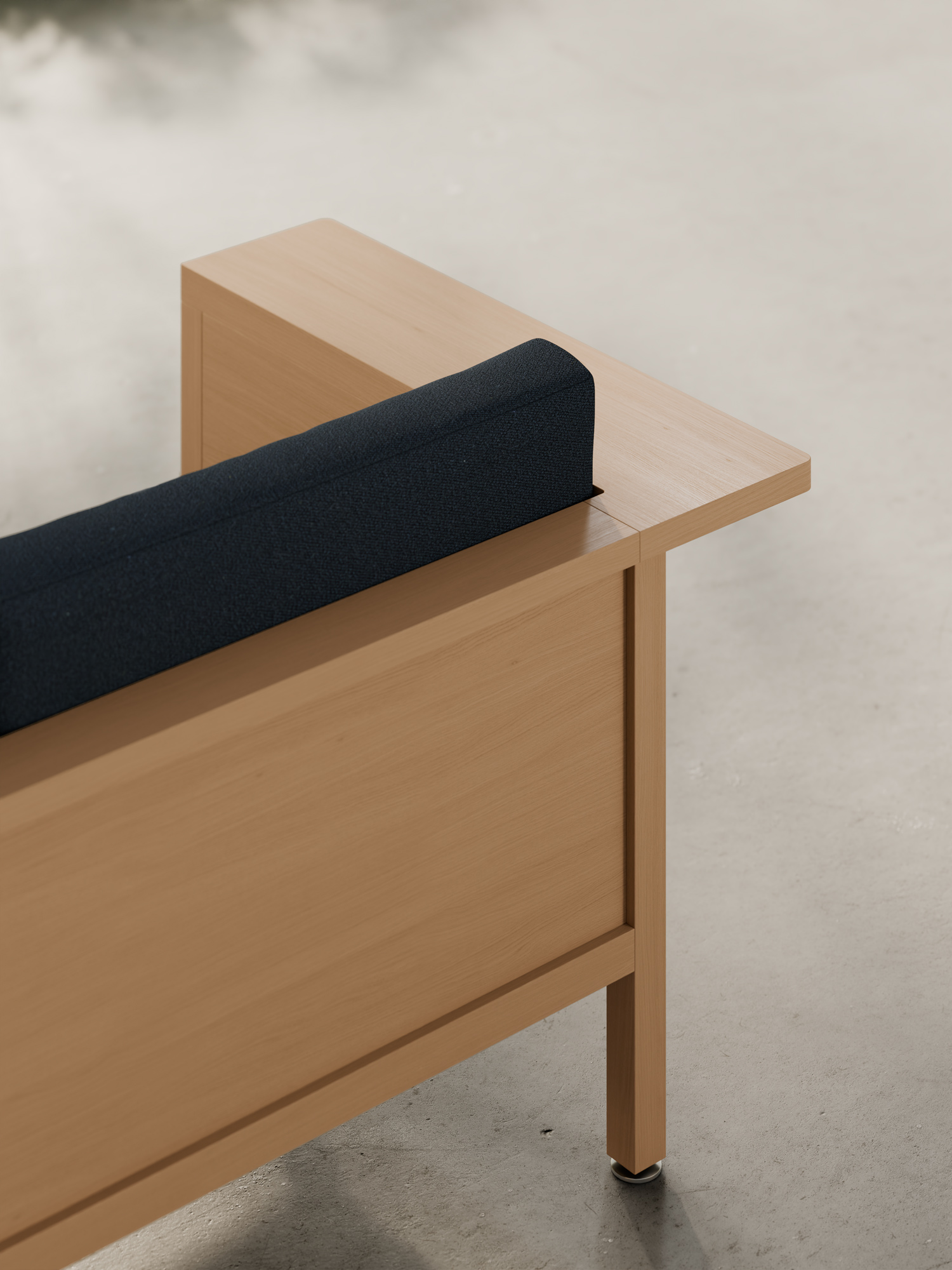 Snøhetta and Citterio's new modular seating system, Borealis. Image: Shestakovych Studio
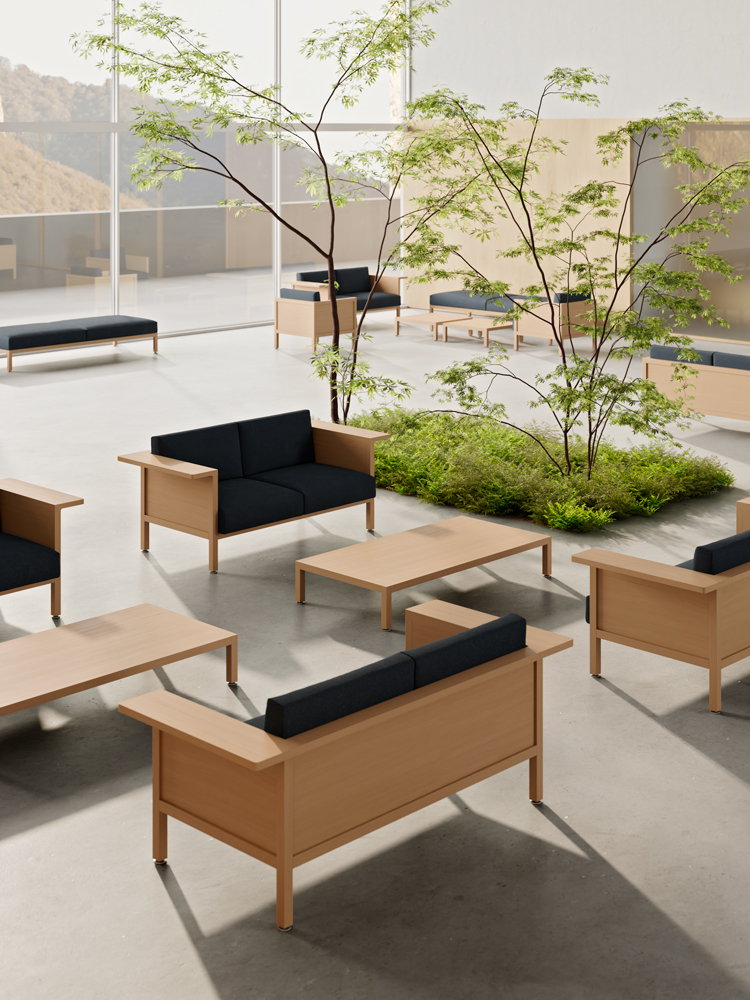 Snøhetta and Citterio's new modular seating system, Borealis. Image: Shestakovych Studio
Borealis marks Citterio’s first collaboration with Snøhetta, the celebrated Norwegian architecture studio that is known for its interdisciplinary, holistic approach to projects such as the Norwegian National Opera and Ballet in Oslo and Under, Europe’s first underwater restaurant. Part of the Molteni Group, Citterio has long worked with architects and designers to fuse furniture and architecture, advocating for furniture as spatial infrastructure rather than ornament. Borealis extends this lineage, translating architectural thinking into a seating system attuned to the evolving demands of contemporary workspaces – combining cutting-edge technology, spatial agility and material tactility.
“Borealis, to us, describes more of an atmosphere than an object,” Snøhetta explains. “It suggests calmness, clarity and something that shifts with its surroundings. That’s also the intention of the system: composed and adaptable, present in the space without dominating it. The framework gives structure and orientation, while the experience stays soft and human.”
The collection’s formal language begins with a square footprint – a generative unit that ensures dimensional consistency across armchairs, sofas, benches and side tables. The square operates as a rule, allowing the collection to scale from a single chair to larger ensemble landscapes.
“The visible frame sets a clear boundary,” the Norwegian studio notes, “while the upholstery softens that precision from the inside.”
In increasingly hybrid offices, where work, waiting and informal gathering overlap, this modular logic becomes an architectural tool. The interchangeable construction of its wooden profiles and panels enables Borealis to shapeshift: to expand across open lounges or contract into more intimate settings. This modularity acts as a spatial scaffold, future-proofing workspaces with a new template that can repeatedly adapt.
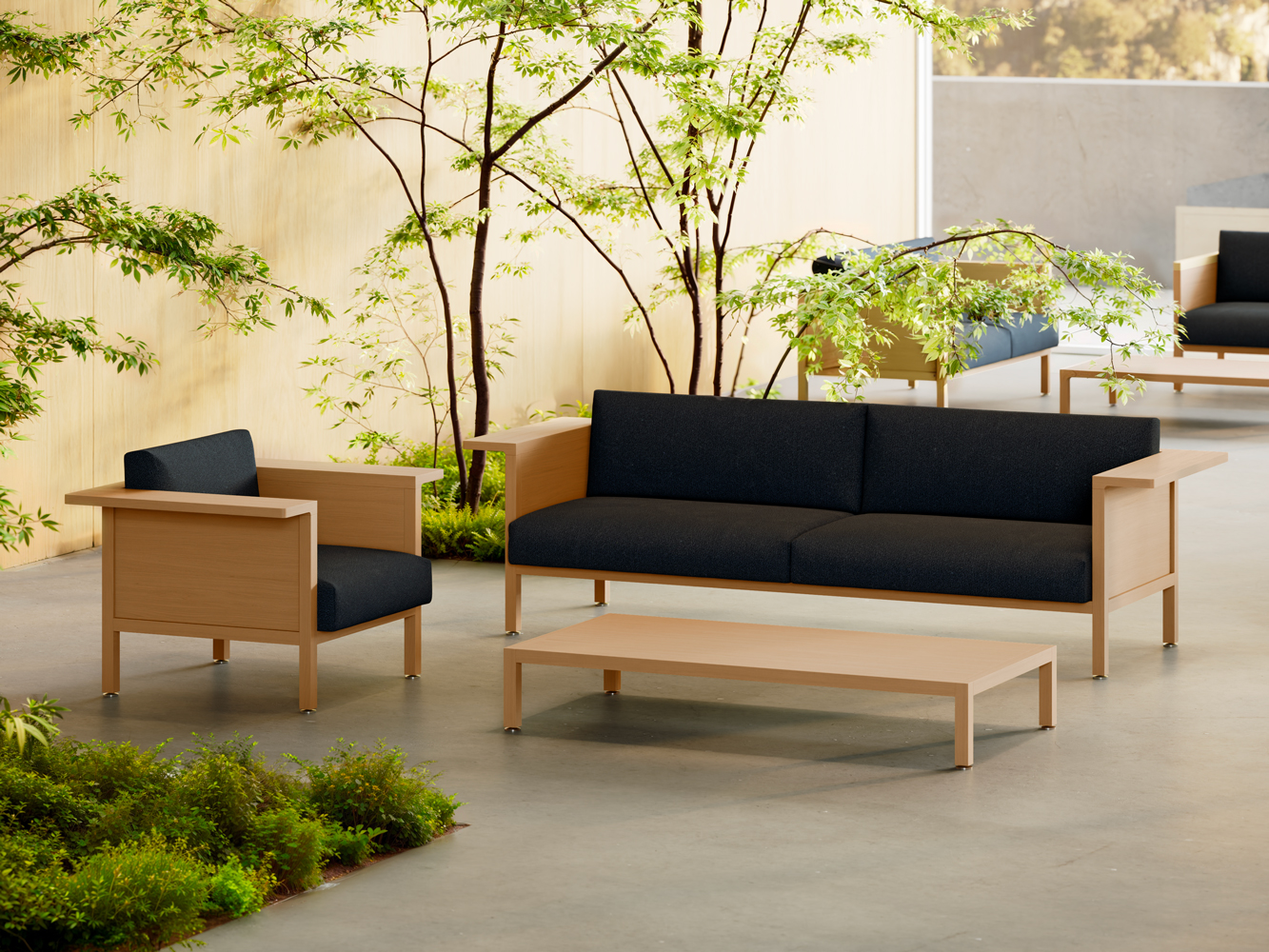 Snøhetta and Citterio's new modular seating system, Borealis. Image: Shestakovych Studio
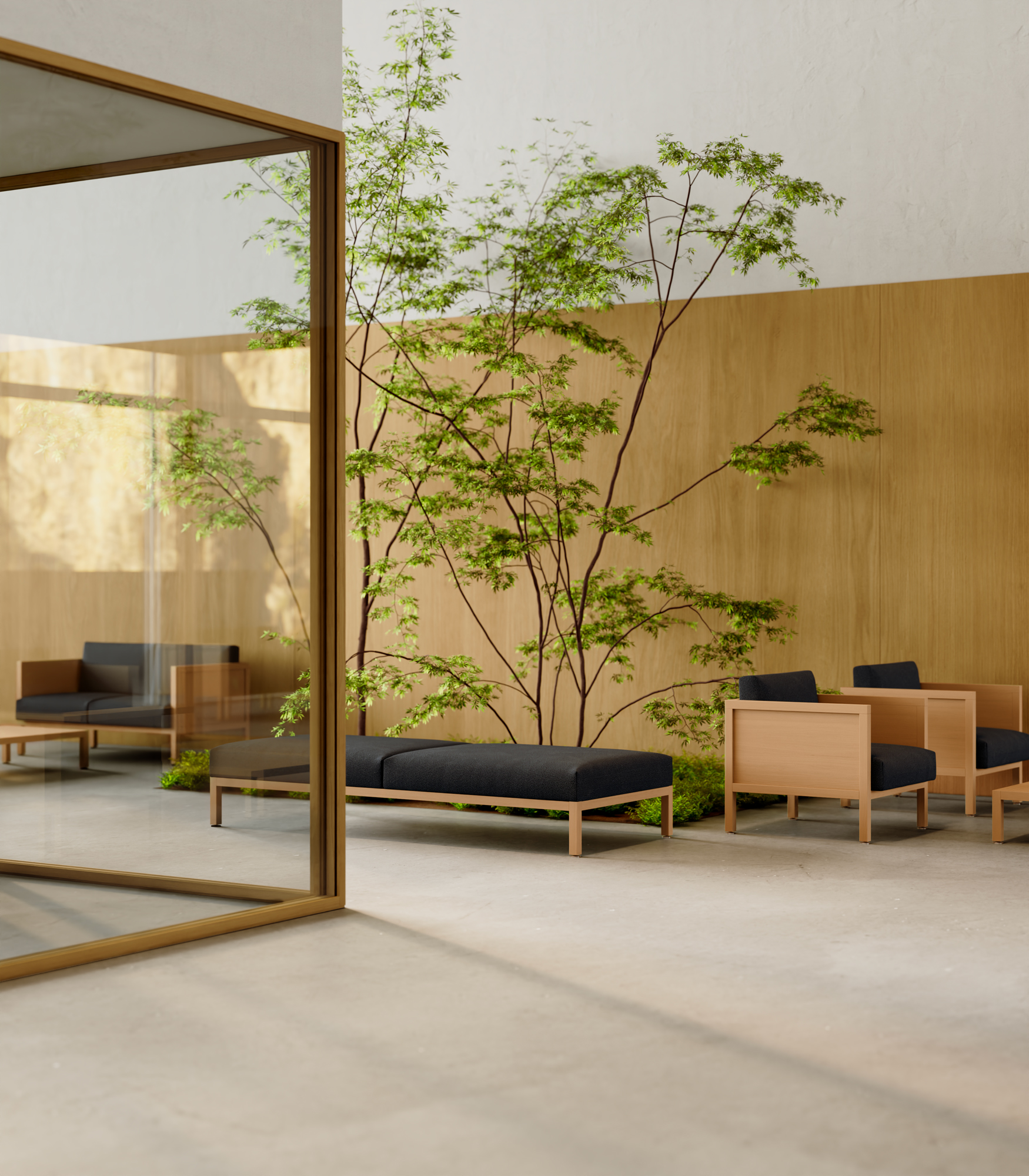 Snøhetta and Citterio's new modular seating system, Borealis. Image: Shestakovych Studio
If the collection’s geometry provides clarity, wood provides warmth. For Snøhetta, the use of this material was essential to inserting a more human dimension into the contemporary workplace. “Wood brings tactility and time into environments that can feel overly technical,” the studio elaborates. “It makes the system legible: you immediately understand what is structural and what is soft, and it adds warmth through touch and light, not decoration.” The oak frame is both structural and welcoming, enabling Borealis to sit comfortably in both open lounges and more intimate settings.
Wood’s psychological resonance is well documented. Writing on ‘Design and The Politics of Wood’ for design studio Formafantasma’s 2020 book Cambio, Italian curator Paola Antonelli describes wood in Scandinavian culture as “serenely symbolic of the region’s penchant for social democracy, celebrating openness, availability, honesty and shared resources and values.” The material carries connotations of craftsmanship, community and longevity. It predates industrialisation; it predates the office itself. In touching wood, we are reminded – however subconsciously – of a longer relationship between human bodies and built environments. Its grain, scent and temperature register sensorially and cerebrally, subtly transporting us beyond the immediacy of work and supporting a calmer, more attentive state of mind.
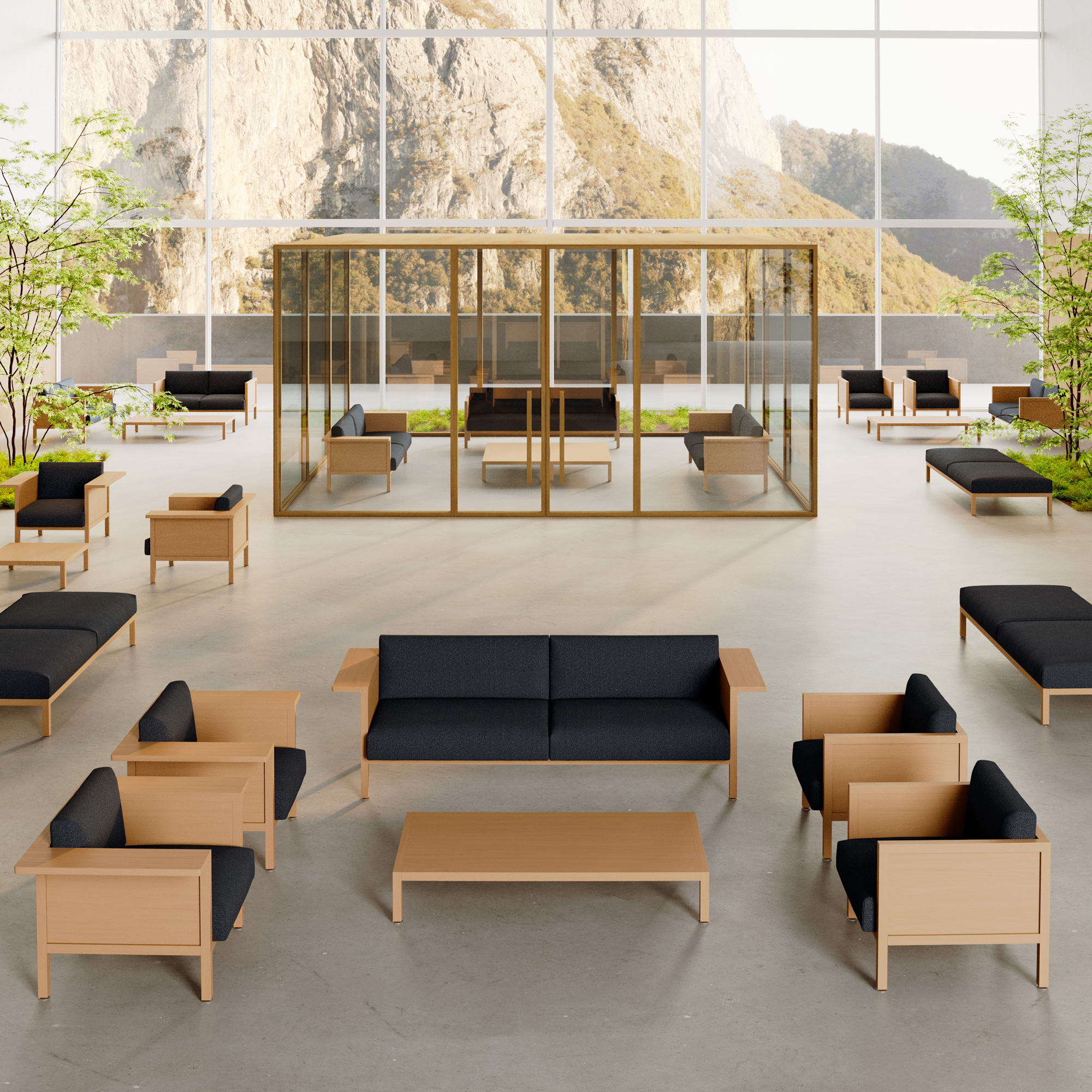 Snøhetta and Citterio's new modular seating system, Borealis. Image: Shestakovych Studio
In early 20-century Copenhagen, the “father” of modern Danish furniture design, Kaare Klint, described furniture as “tools for living”, grounding design in anthropometrics and a close study of how the body rests and moves. That human-centred discipline shaped generations of Nordic designers, from Hans Wegner to Alvar Aalto, whose designs helped establish wood as the defining material of a democratic, human-scaled modernism. Yet the Nordic relationship to timber has also been romanticised. As cultural geographer Juha Ridanpää has argued in their essay ‘Conceptualizing the North: Orientalism in the Arctic’, the idea of “the North” is often mythologised – naturalised into assumptions about authenticity and organic purity. Borealis, by contrast, avoids performing Nordic-ness as symbol. Its oak planes are crisply defined, their intersections resolved with industrial accuracy. The warmth of the material is heightened – not diluted – by rigorous manufacture. In this context, wood becomes the meeting point between Italian craft and Nordic restraint, between tactility and technology – restoring a sense of material presence and wellbeing to corporate interiors.
Citterio positions Borealis within its philosophy of “Tech by Nature”, which is a concept that marries innovation, natural materials and long-term quality. For Snøhetta, the phrase signals a balance: “[Technology] that serves material clarity, comfort and longevity, not technology for technology’s sake. In Borealis, the technical work is largely invisible and in support of the materials and design: precision in joints, hidden solutions, modular logic,” the studio explains. “The result is a system that performs quietly over time, while the materials keep the experience grounded and calm.”
This calibrated restraint recalls a description that has historically been applied to Nordic modernism – “modern but not shockingly modern”. Borealis adopts a similar approach: progressive without rupture, with a square footprint that is rigorous and repeatable, yet materially warm. Refinement and comfort coexist within the same frame, shaping the experience of sitting without shouting about it. That discretion also resonates with the Molteni Group’s long-standing dialogue with architecture and industry. Borealis is conceived not as an isolated object but as part of a broader spatial ecosystem, in conversation with architectural surfaces and systems – technology placed firmly at the service of spatial quality and wellbeing.
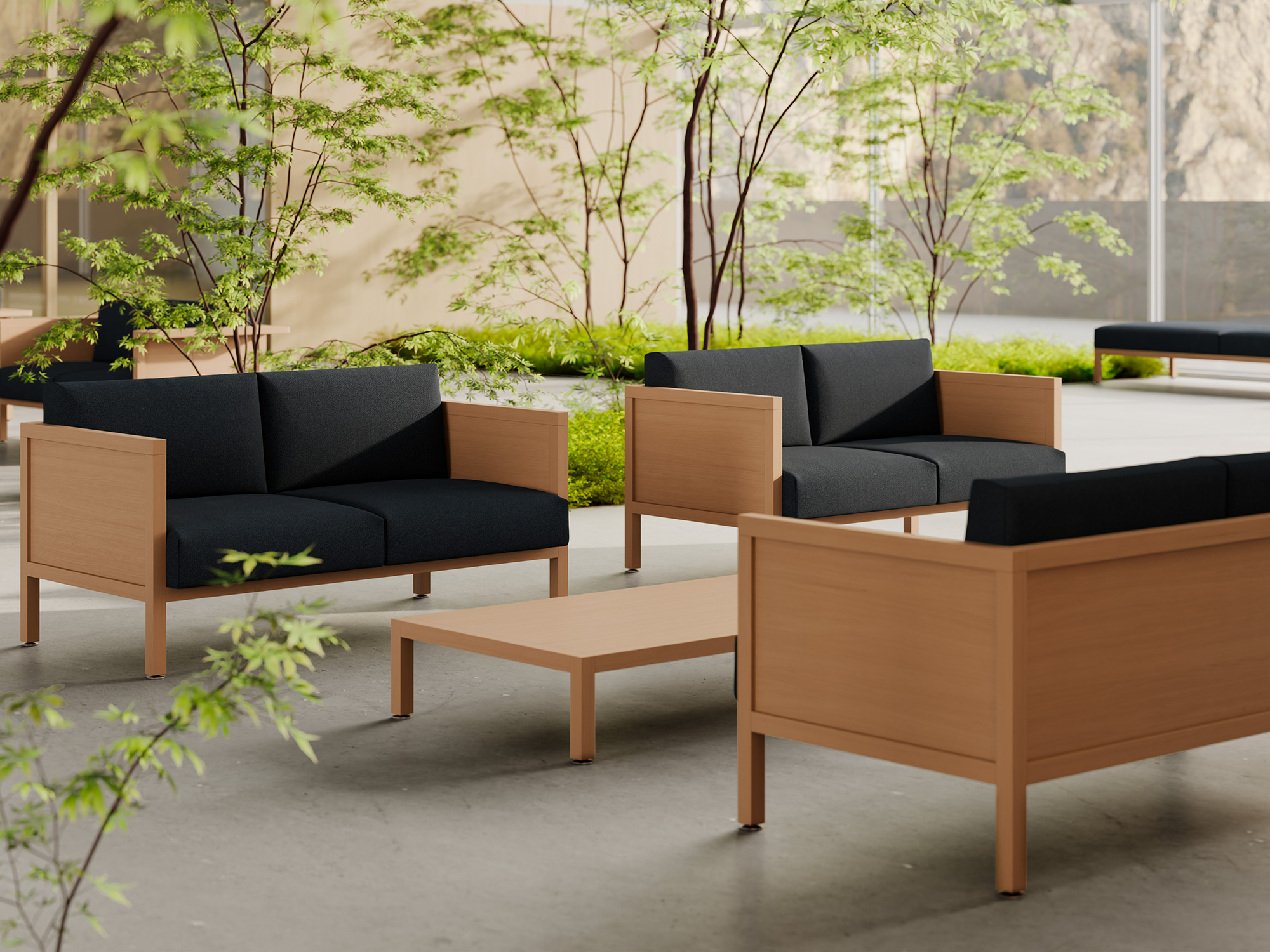 Snøhetta and Citterio's new modular seating system, Borealis. Image: Shestakovych Studio
This collaboration between an Italian manufacturer and a Scandinavian studio could have easily slipped into caricature: beauty versus function, luxury versus austerity. Borealis, however, suggests a more nuanced exchange. “Our ‘Nordic’ context is not about materials or heritage,” Snøhetta reflects, “but rather about seeking purpose and essentialism in the objects we surround ourselves with.” That essentialism – a reduction to what is necessary – aligns with Citterio’s industrial precision and deep craftsmanship. Both partners share an ambition for forms that are at once practical and atmospheric.
“We were aligned on what the system should do: support spaces with function and flexibility without taking it over,” the studio explains. “Together, Borealis has become a system or a platform that’s refined, durable and quietly architectural.”
Rather than hybrid or compromise, the result feels like synthesis. The collection retains the structural clarity associated with Italian manufacturing, while embracing a warmth and attentiveness to comfort often linked to Nordic interiors. Elegance and utility are not opposing forces here, but interdependent qualities. In a contemporary workspace increasingly defined by flux, Borealis offers stability without rigidity. Its square geometry establishes order; its oak frame offers familiarity; its upholstered volumes invite pause. The modular system demonstrates that efficiency need not come at the expense of comfort.
Although furniture may rarely command attention in waiting rooms or transitional areas, it quietly conditions our experience of them. By treating seating as architecture in miniature, Citterio and Snøhetta foreground that influence. Borealis does not seek spectacle; it refines atmosphere, introducing warmth into environments long defined by efficiency alone. Within the collection, technology and nature are not positioned as opposites, but as partners. It reminds us that precision can coexist with tactility; modular systems can feel intimate. While two chairs, a sofa and a table can’t resolve every workplace woe, the right furniture can certainly, quietly make a space feel more composed, supportive and human.
Main Image: Snøhetta and Citterio's new modular seating system, Borealis.
Image credit: Shestakovych Studio
A century of sound, design, and memory explored through an elegant reflection on acoustics as an emotional and architectural experience, in the enduring spirit of Bang & Olufsen.
The Future Perfect’s David Alhadeff and ceramicist Carmen D’Apollonio guide us through the cultural hotspots of the city they call home: Los Angeles.
Porosity between the exterior and interior space defines contemporary luxury in a series of new developments that open up buildings to the great outdoors.


